Fez : A Journey into the Heart of Living Heritage
In Fez, every doorway opens onto a story. Behind its ancient walls, artisans keep centuries-old traditions alive, hidden palaces conceal tranquil gardens, and the scent of spices drifts from family kitchens. Morocco’s spiritual capital offers far more than an extraordinary cultural heritage – it invites visitors to become part of it. Whether discovering the intricate art of zellige tilework, taking a Moroccan cooking class, attending an Arabo-Andalusian music performance or meeting a master craftsman, every experience reveals a living tradition that has been passed down for more than twelve centuries.
Fez: Twelve Centuries of Living Heritage
Fez was founded in the late eighth century by Moulay Idriss I. His son, Moulay Idriss II, later established a city on the left bank of the Fez River. As the two cities gradually merged over the centuries, they gave rise to one of the world’s largest medinas, now inscribed on the UNESCO World Heritage List.
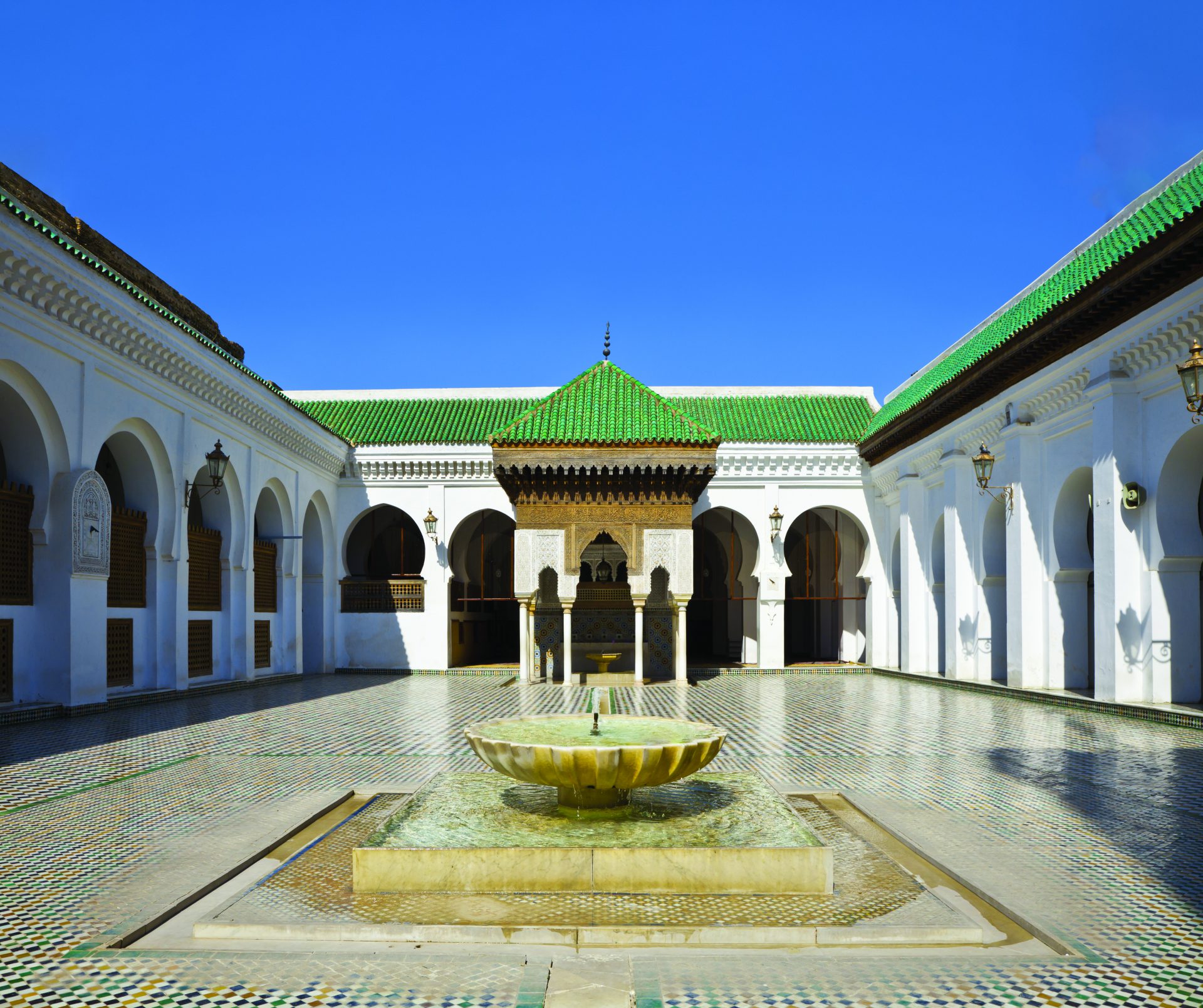
The first imperial capital of Morocco, Fez became one of the country’s foremost centres of learning thanks to Al Quaraouiyine, founded in 859 by the remarkable Fatima al-Fihriya, a visionary and pioneering woman. Today recognised by UNESCO as the world’s oldest continuously operating university, Al Quaraouiyine comprises a mosque, a renowned library, madrasas (Islamic colleges) and scientific annexes that have shaped the city’s intellectual influence for centuries.
Fez is equally renowned for its exceptional craftsmanship. Its famous Moroccan leather, traditionally tanned and dyed using centuries-old techniques, intricate zellige mosaics, carved stucco, cedar woodwork, ceramics and hammered copper all preserve skills handed down from one generation to the next.
The same spirit of craftsmanship is reflected in the city’s cuisine, Arabo-Andalusian music and decorative arts. Today, a new generation of artisans, chefs and designers is breathing fresh life into these age-old traditions while remaining deeply rooted in their heritage.
Fez is more than a city to visit – it is a city to experience. The following itinerary invites you to discover the true soul of Morocco’s spiritual capital.
Courtyard of Al Quaraouiyine Mosque.
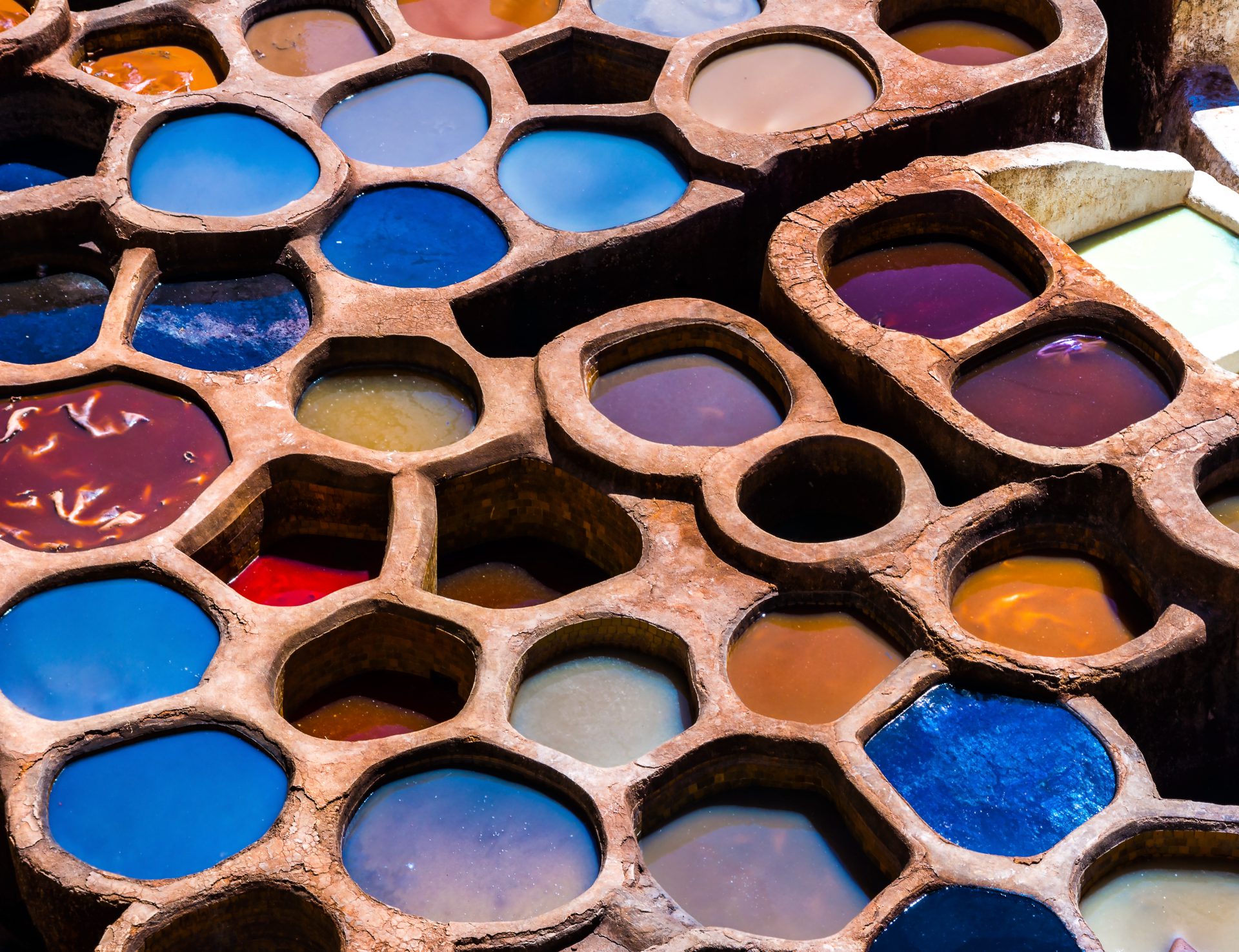
View of the traditional tanneries.
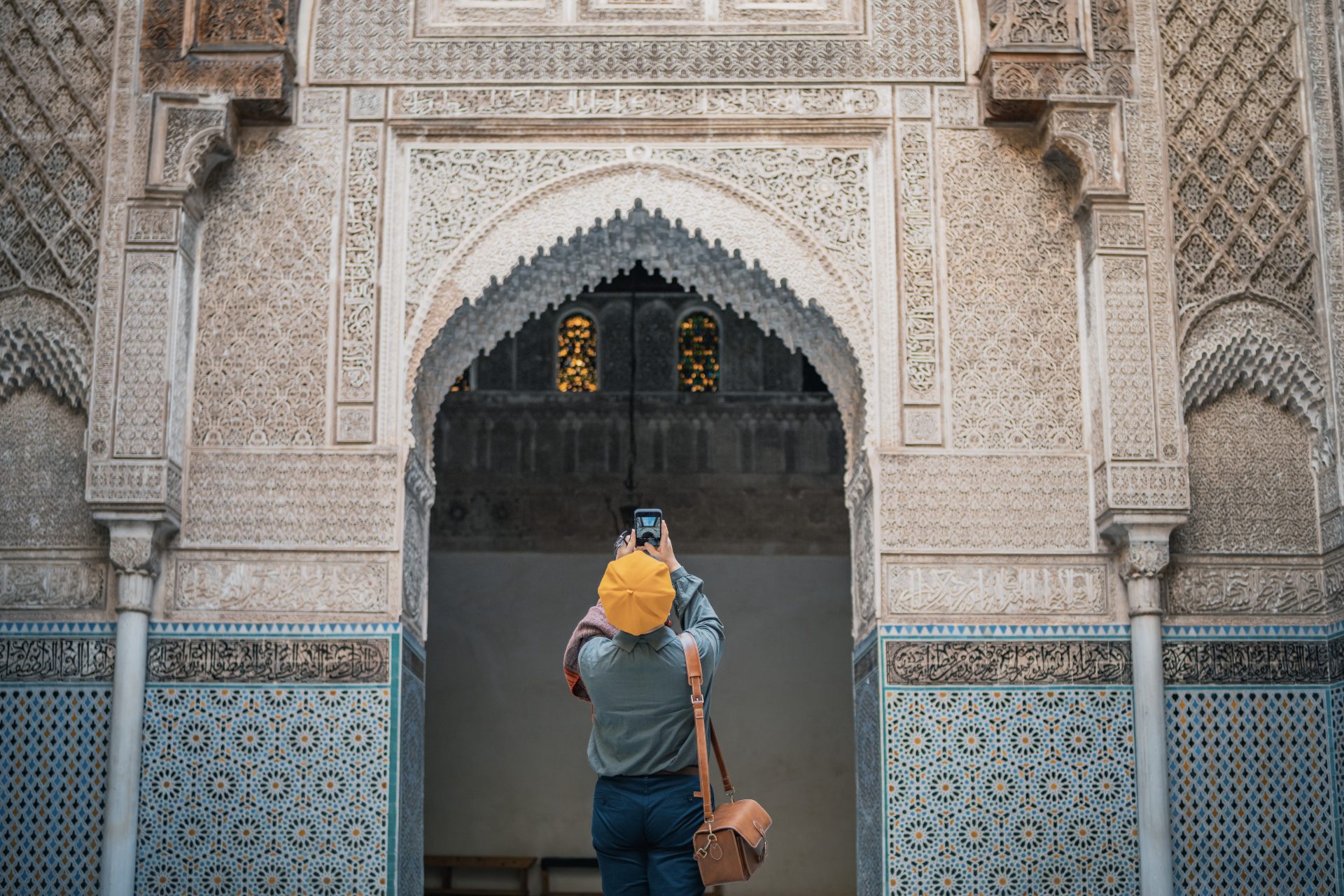
The Bou Inania Madrasa (Quranic school)
Day 1 • First Steps into the Medina
There is no better time to explore Fez than early in the morning, when the medina begins to stir. Enter through Bab Boujloud, the city’s iconic Blue Gate, and follow Talaa Kebira into a maze of narrow streets where the aroma of freshly baked bread drifts from communal ovens, spice merchants arrange colourful displays and artisans throw open the doors of their workshops. It is here, in the vibrant heart of the old city, that Fez’s remarkable intellectual and cultural heritage begins to unfold.
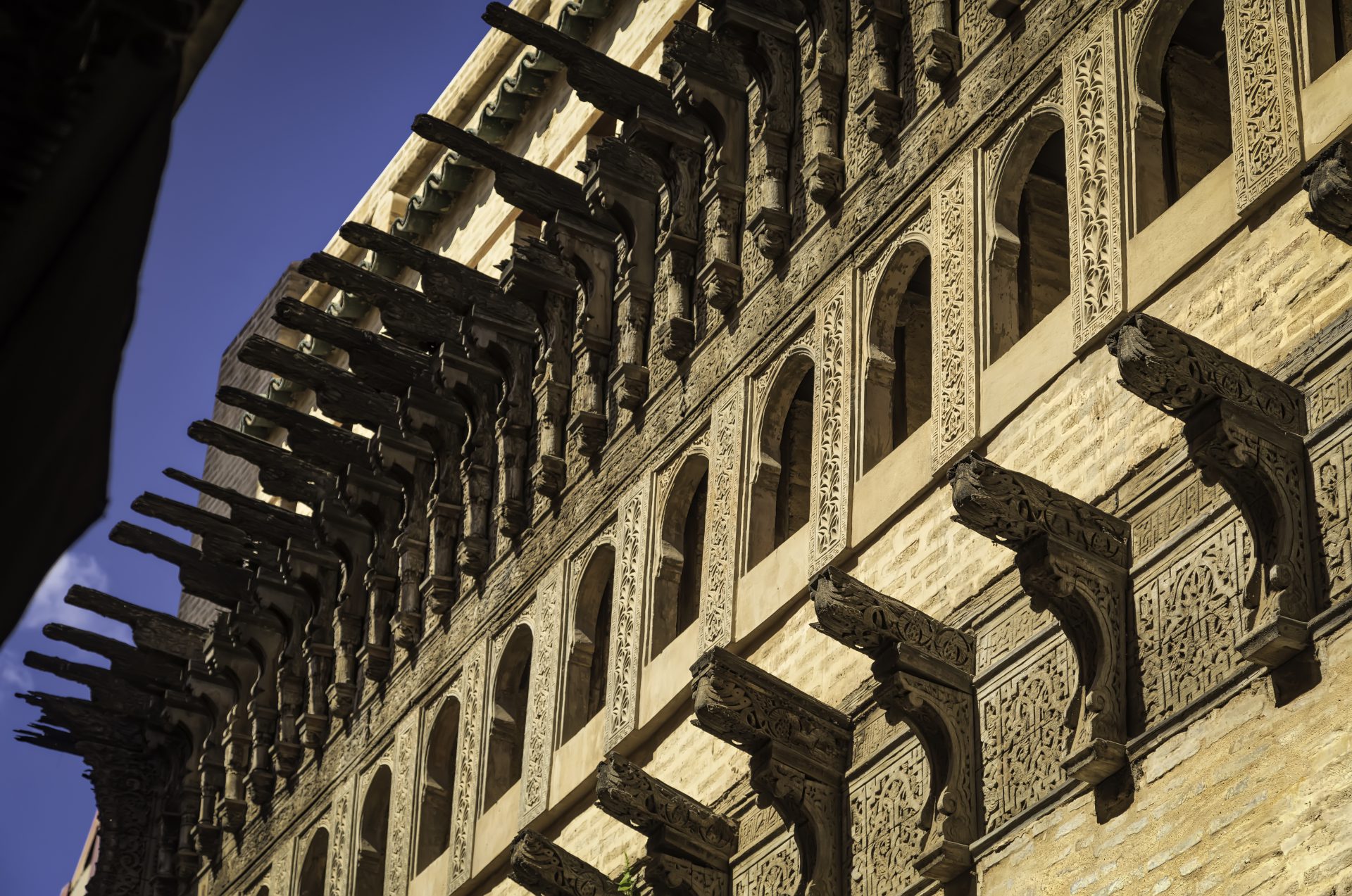
The Bou Inania Madrasa reveals its intricate zellige tilework, finely carved stucco and beautifully crafted cedar ceilings. A few steps further on lie the surroundings of Al Quaraouiyine, followed by those of the Zaouia of Moulay Idriss II. As you wander through the winding streets, fountains, fondouks (traditional inns) and patios glimpsed through half-open doors reveal the medina’s hidden wealth.
View of the traditional tanneries.
Lunch at Café Clock
Set within a beautifully restored traditional house, Café Clock offers a contemporary take on Moroccan cuisine in a relaxed and welcoming atmosphere. Just a few steps away, Dar al-Magana is home to a mysterious fourteenth-century hydraulic clock whose ingenious mechanism continues to fascinate historians.
The Craftsmanship of Fez
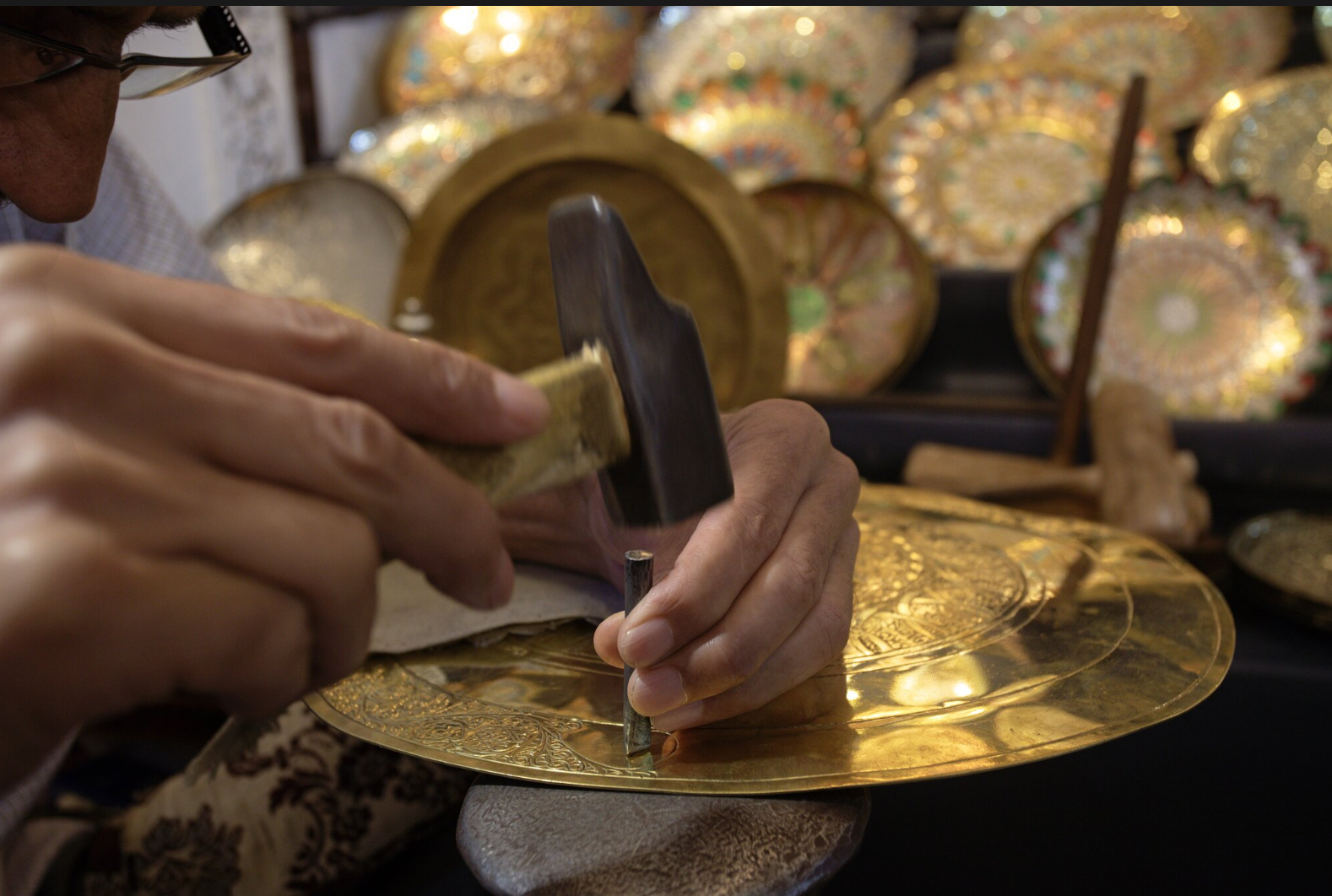
The unmistakable sound of coppersmiths at work fills Seffarine Square, where skilled artisans have practised their craft for generations. Nearby, Fondouk Nejjarine, once reserved for carpenters and woodworkers, now houses the Museum of Wooden Arts and Crafts. Continue through the districts of weavers and leatherworkers before reaching the famous Chouara Tanneries, best admired from one of the surrounding terraces overlooking the colourful dyeing vats below.
Sunset at Borj Nord
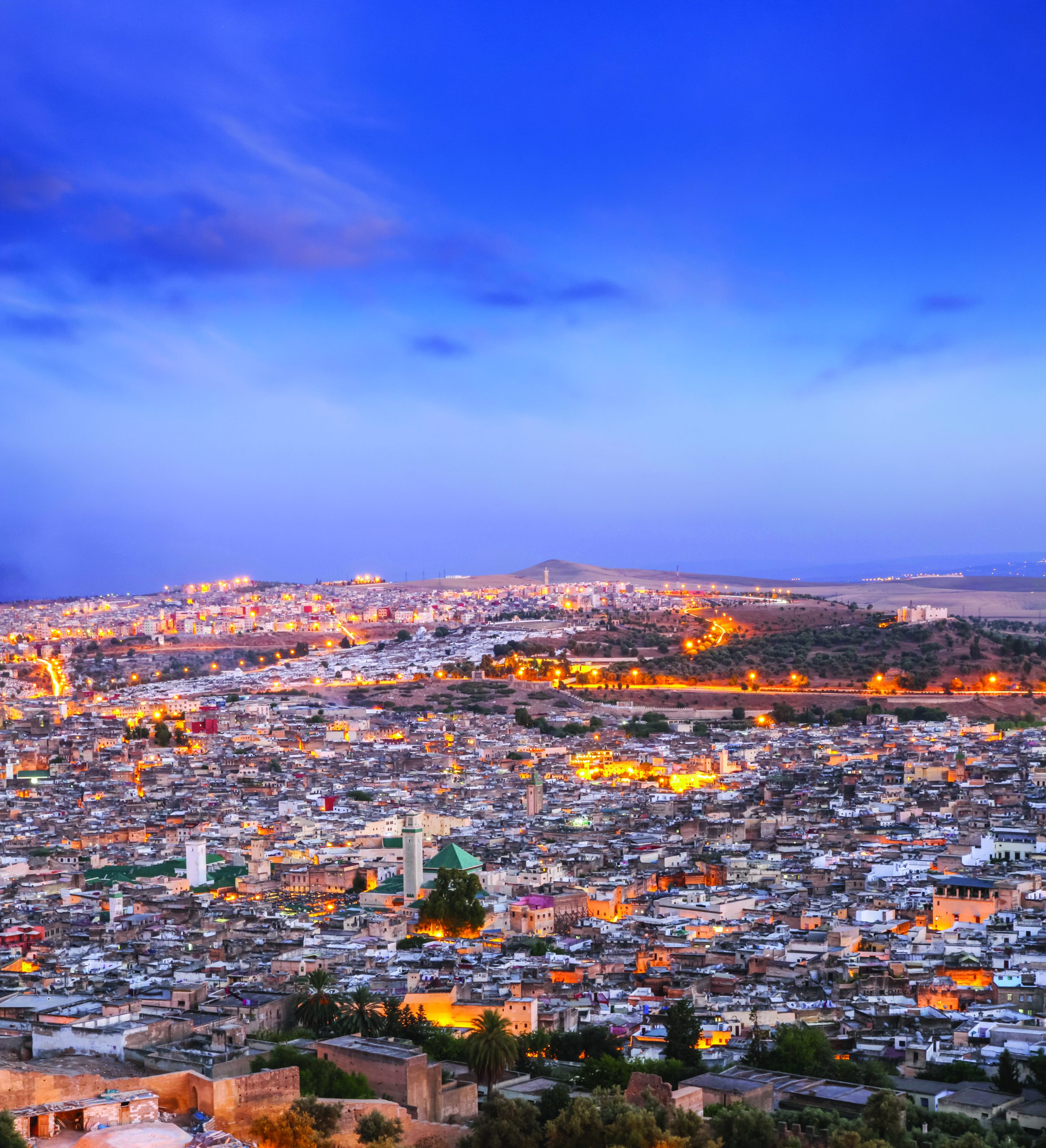
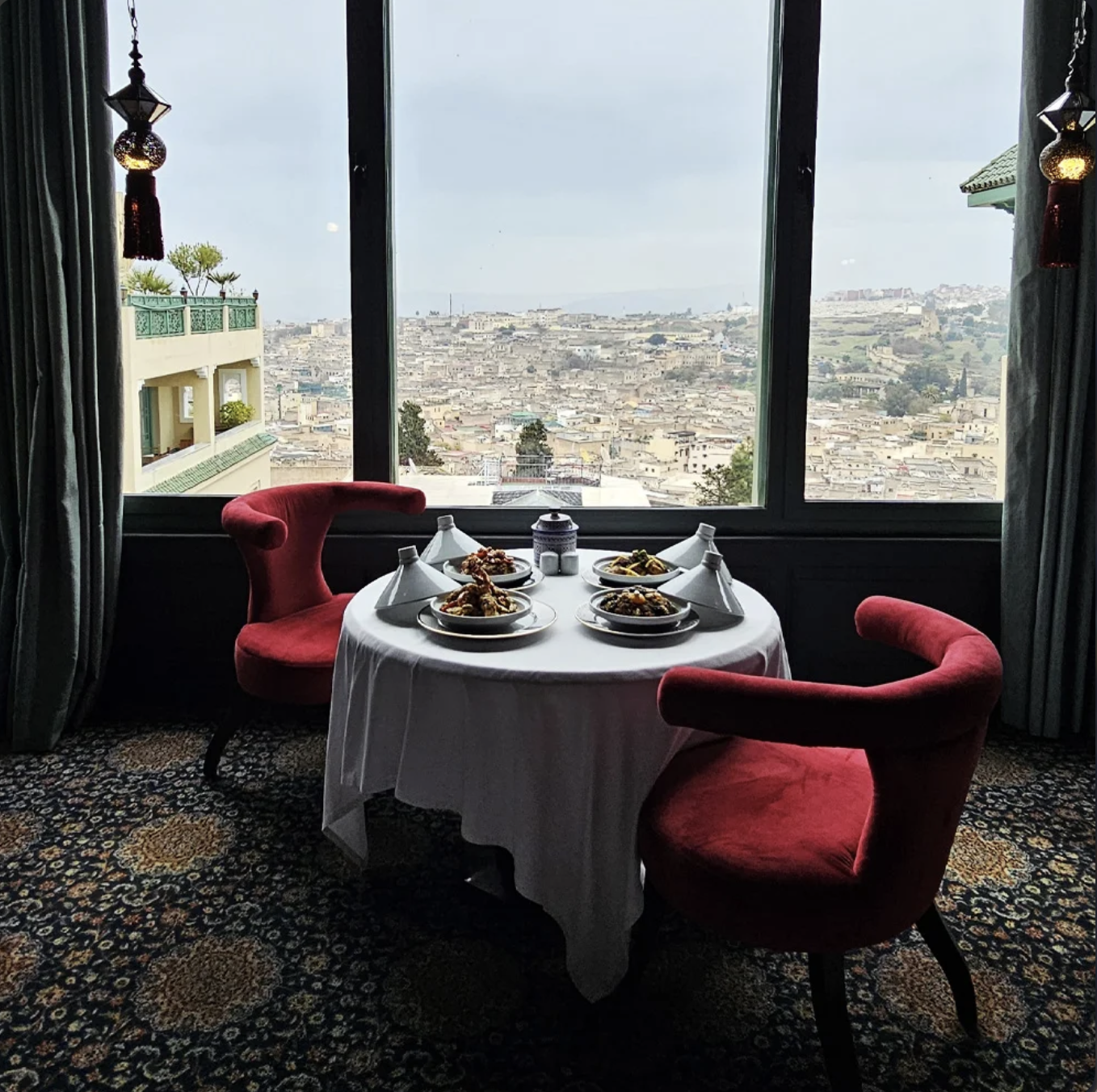
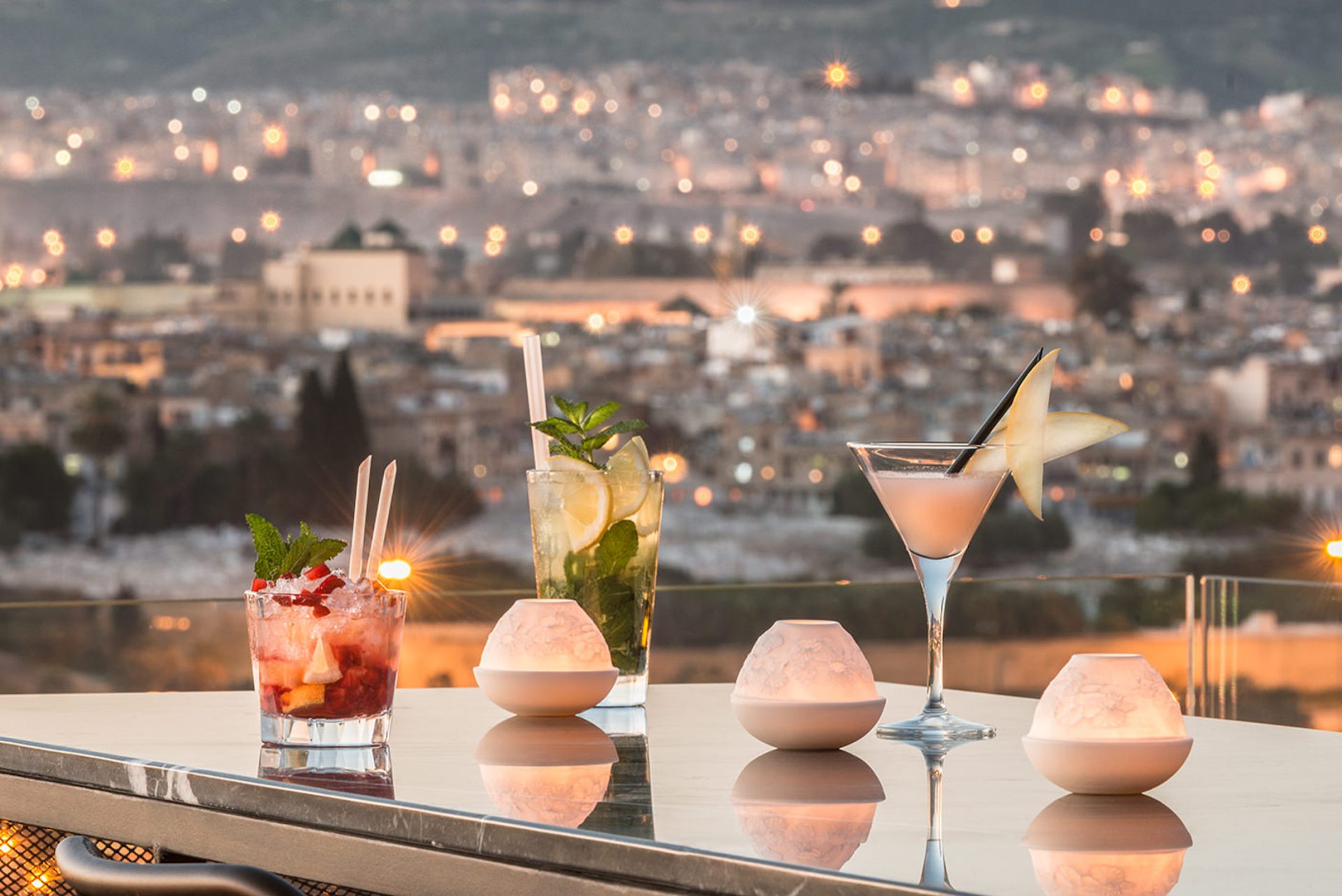
Perched above the city, Borj Nord commands one of the finest panoramic views over the medina of Fez. The historic fortress is also home to an outstanding Arms Museum tracing several centuries of Moroccan military history. End the day at Les Mérinides Hotel or on the rooftop terrace of a traditional riad, where a dinner celebrating the rich flavours of Fassi cuisine is served against the magical backdrop of the medina as its lights begin to twinkle at dusk.
The hydraulic clock at Dar al-Magana.
Day 2 • Discovering the Secrets of Fez’s Craftsmanship
Palaces and Gardens
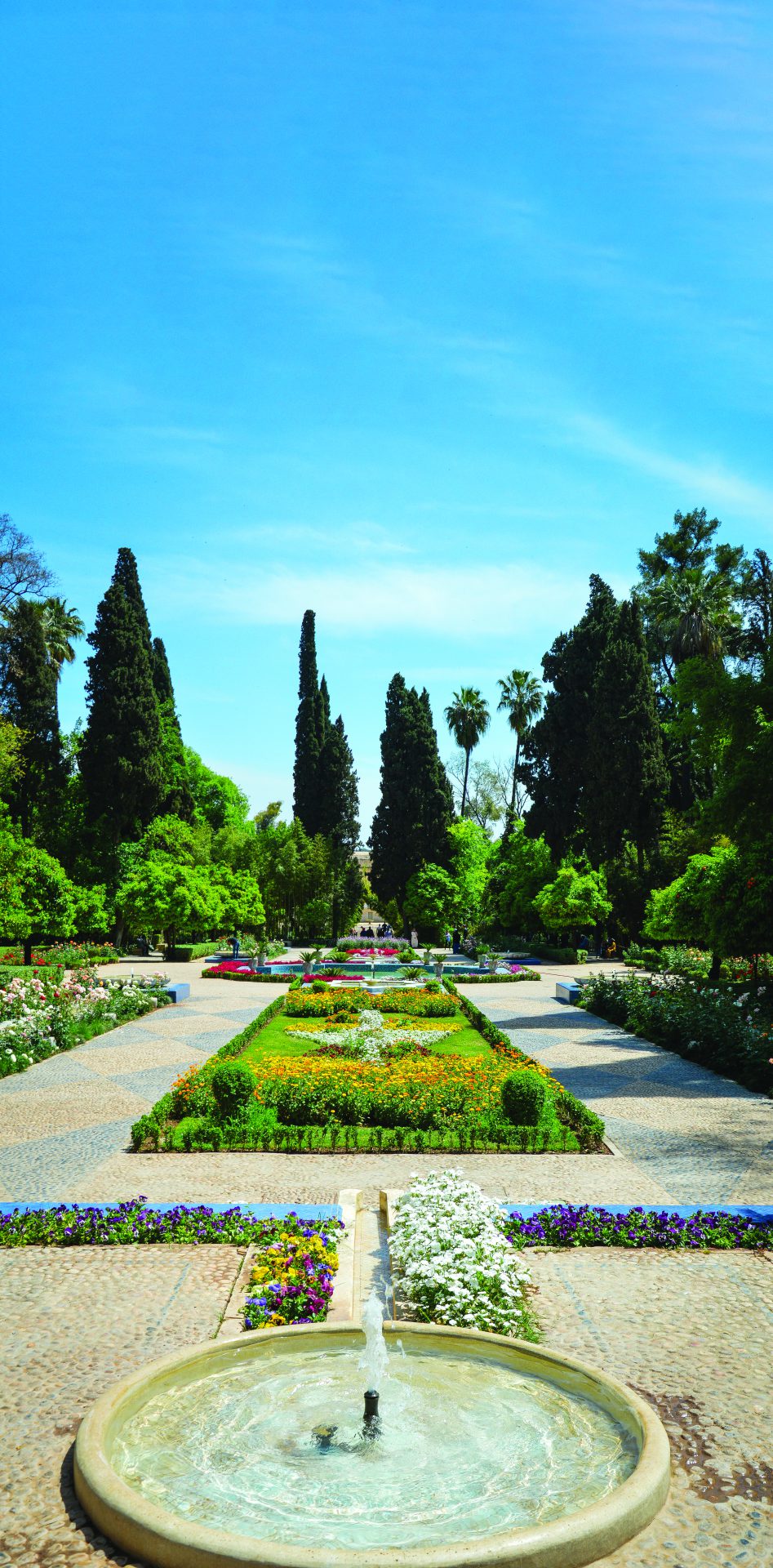
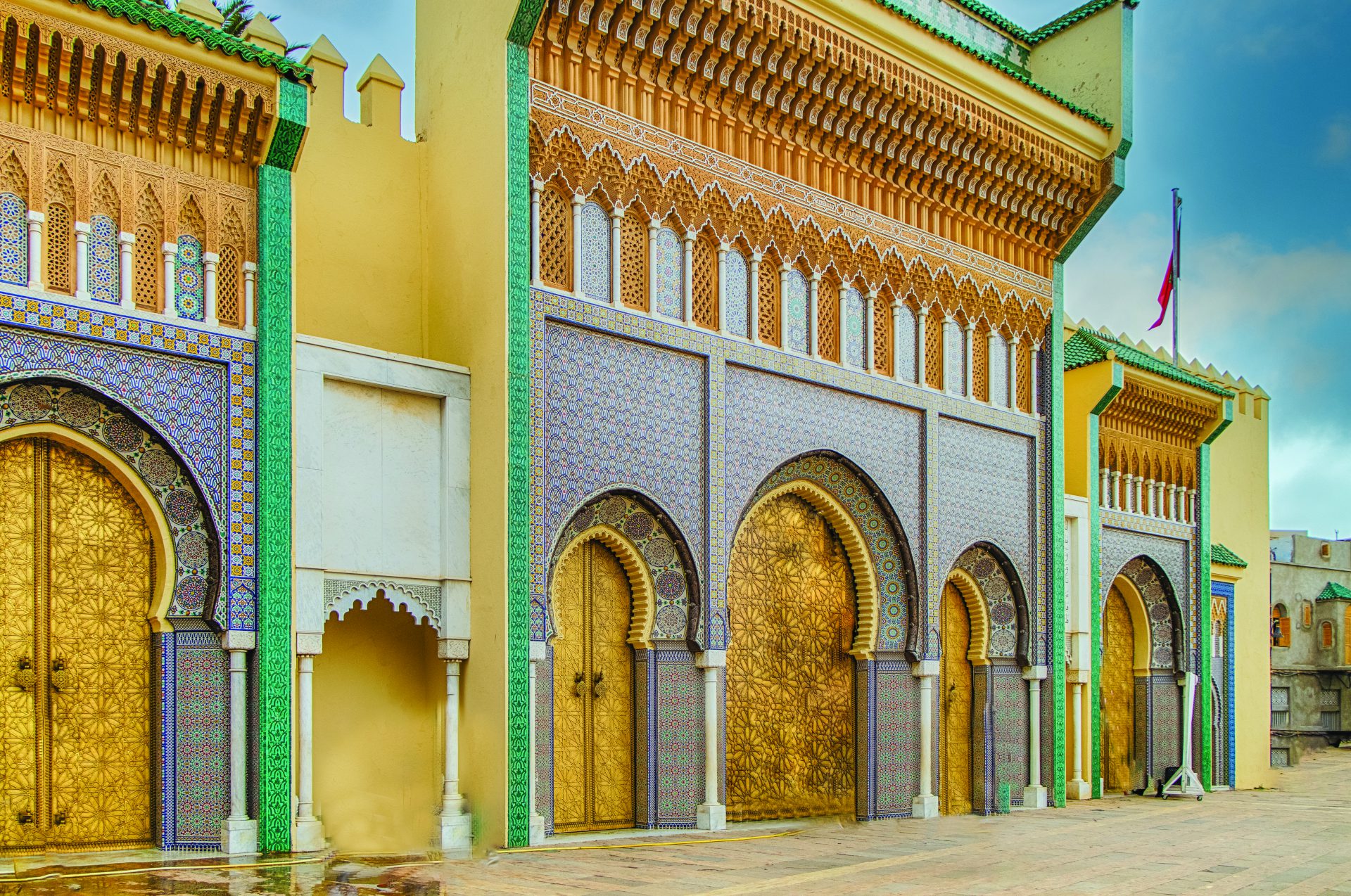
The day begins at the majestic bronze gates of the Royal Palace, a masterpiece of Moroccan craftsmanship and one of Fez’s most photographed landmarks. From there, the quieter streets of Fès El-Jdid lead to the tranquil Jnan Sbil Gardens, a peaceful oasis where ornamental pools, fountains and centuries-old trees provide a welcome escape from the bustle of the medina. Continue to the Batha Museum, housed in a former royal palace, whose collections of ceramics, carved wood and decorative arts offer a fascinating insight into the refinement of traditional Fassi culture.
Inside the Workshops of Master Artisans
No visit to Fez is complete without trying your hand at one of the city’s celebrated crafts. At Art Naji, visitors discover the centuries-old art of zellige, from shaping the clay to painstakingly cutting each individual tile before creating their own geometric designs. Those with an interest in woodworking can also learn the art of cedar carving in one of the medina’s traditional workshops. It is a unique opportunity to appreciate the precision of techniques passed down through generations and to meet the artisans who continue to uphold Fez’s remarkable craft heritage.
An Evening of Gastronomy, Music and Spirituality
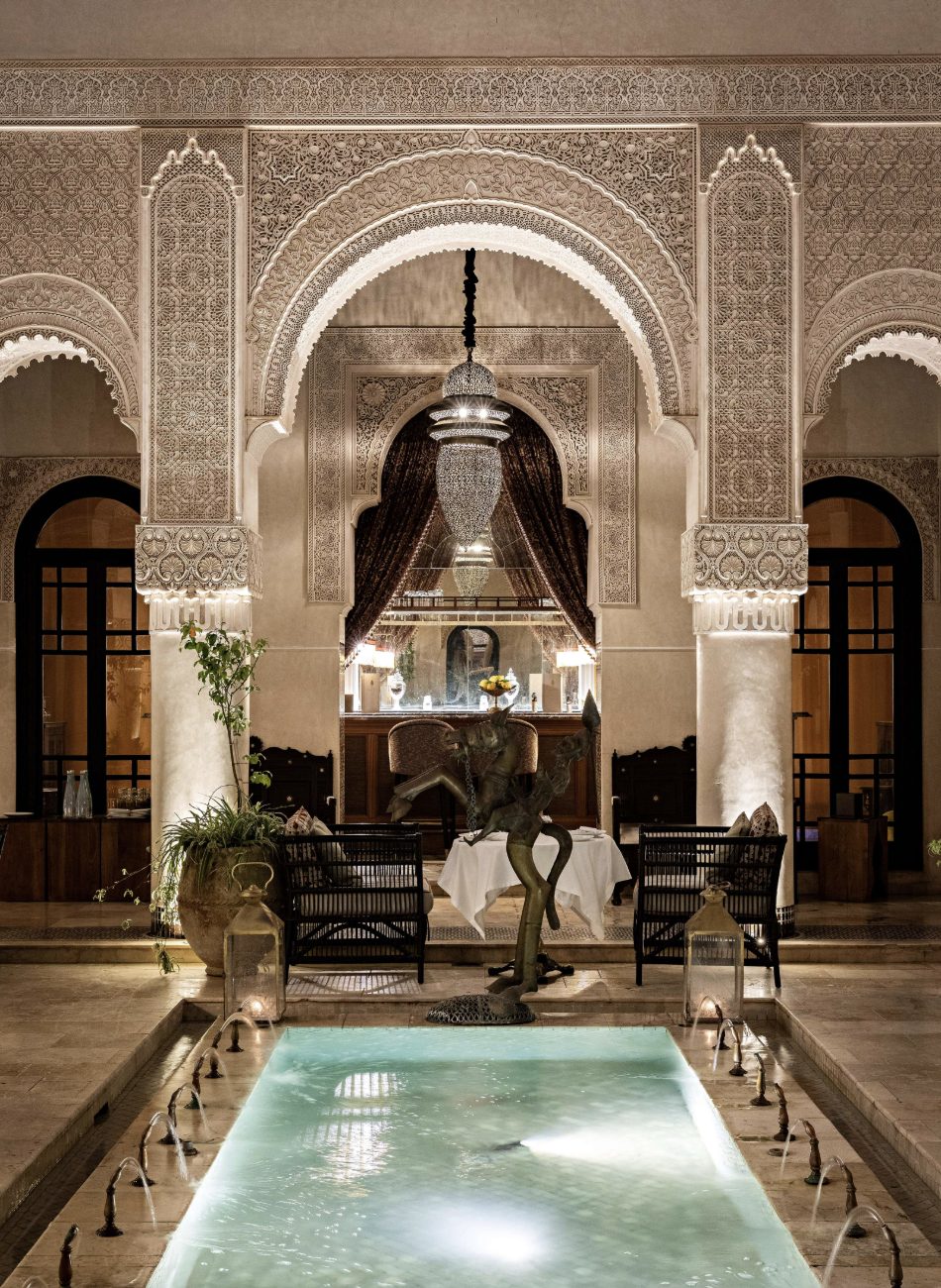
Each autumn, the Fez Festival of Sufi Culture and World Spiritualities brings together concerts, lectures and cultural encounters in some of the city’s most remarkable historic venues. Throughout the rest of the year, an intimate Arabo-Andalusian music performance in a traditional riad or historic palace offers another opportunity to experience the city’s unique spirit. End the day with a refined dinner at Palais Faraj or Riad Fès, where the distinctive flavours of Fassi cuisine are served in surroundings that reflect the timeless elegance of the city’s architectural heritage.
All Rights Reserved Riad Fes.
All Rights Reserved Palais Faraj.
Day 3 • A Taste of Fez
From the Souks to the Kitchen
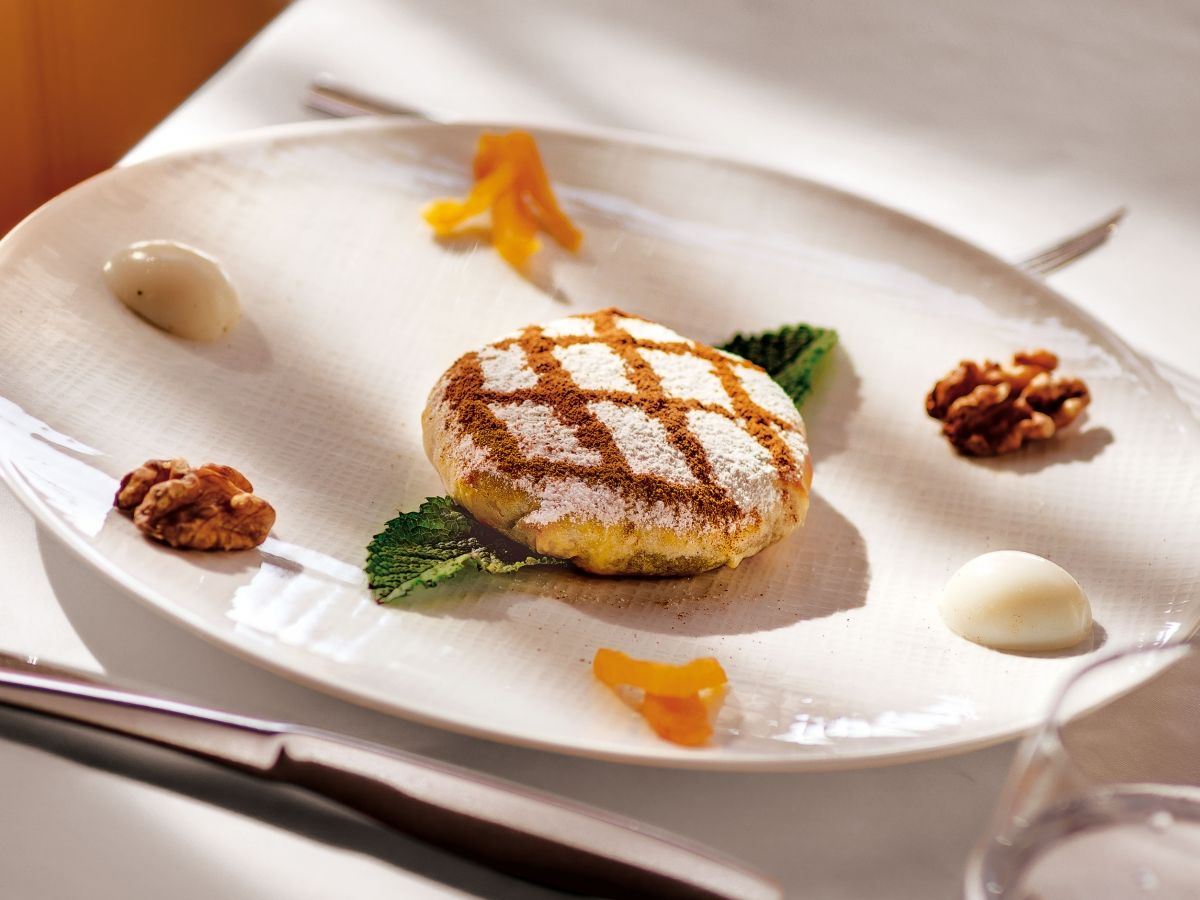
The day begins in the bustling markets of the medina alongside the chefs of The Ruined Garden or Palais Amani. As you wander through the colourful stalls, fragrant herbs, olives, aromatic spices, and seasonal fruit and vegetables reveal the remarkable richness of Fassi cuisine. This delicious introduction is followed by a hands-on cooking class, where you’ll learn to prepare some of the city’s best-loved dishes, from the iconic pastilla and delicate Moroccan salads to fragrant tagines. Lunch is all the more rewarding as you sit down to enjoy the meal you have prepared yourself.
The Art of Well-being
After the energy of the souks, it’s time to slow the pace. A traditional hammam, such as Hammam Mernissi, offers an introduction to Morocco’s age-old wellness rituals, combining black soap, ghassoul clay and fragrant orange blossom water before a relaxing massage completes the experience. Those seeking a more contemporary setting will appreciate the elegant spa at Palais Faraj, where these ancestral traditions are reinterpreted with modern refinement.
Treasures to Take Home
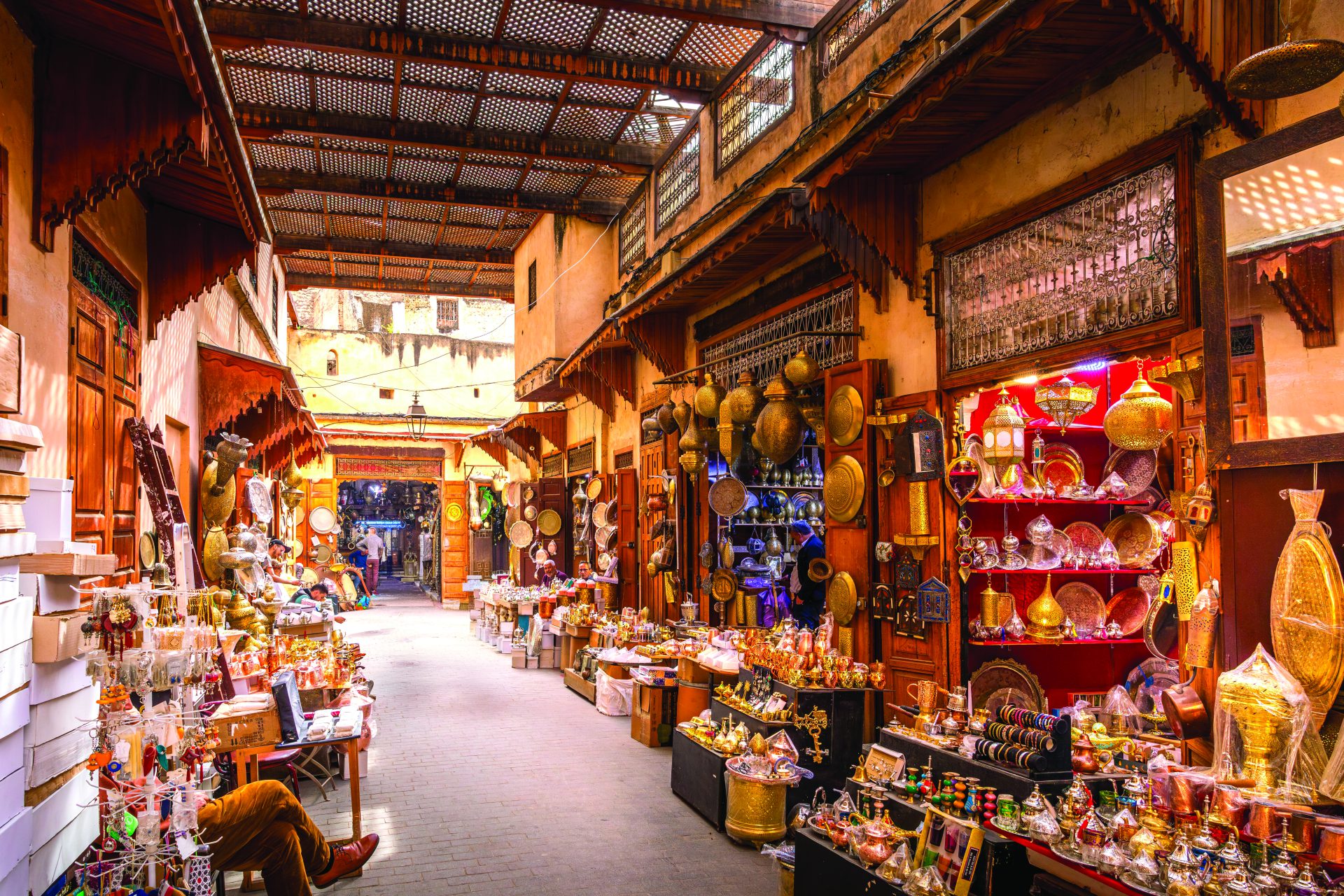
Before leaving the city, take time to browse the workshops and boutiques of the medina. Blue pottery from Fez, hand-hammered copper trays, traditional Fassi embroidery, carved cedar wood, floral waters and spice blends prepared by local herbalists are among the treasures that allow the journey to live on long after you’ve returned home, each reflecting a craft tradition that continues to thrive.
Round off your stay with a final glass of mint tea on the rooftop terrace of a traditional riad, overlooking the medina’s minarets. It is the perfect opportunity to savour the unique atmosphere of Morocco’s most spiritual imperial city one last time.
Shopping streets of the old Medina.
Where to Stay in Fez
Riad Fès
A distinguished Relais & Châteaux property, renowned for its timeless Arabo-Andalusian elegance and spectacular rooftop overlooking the medina.
Palais Faraj
Set within a beautifully restored nineteenth-century palace, this luxurious hotel combines sumptuous interiors, refined dining, an elegant spa and exceptional panoramic views over Fez.
Karawan Riad
An intimate boutique hotel where heritage, contemporary design and Moroccan craftsmanship come together in an atmosphere of understated elegance.
Hotel Sahrai
A stylish contemporary retreat featuring an infinity pool, a Givenchy Spa and one of the finest views over the historic medina.
Les Mérinides
Perched on the hills overlooking Fez, this landmark hotel is renowned for its breathtaking views across the medina and its proximity to the Marinid Tombs.
All Rights Reserved Hotel Sahrai.
All Rights Reserved Riad Fes.
Beyond Fez
Meknes
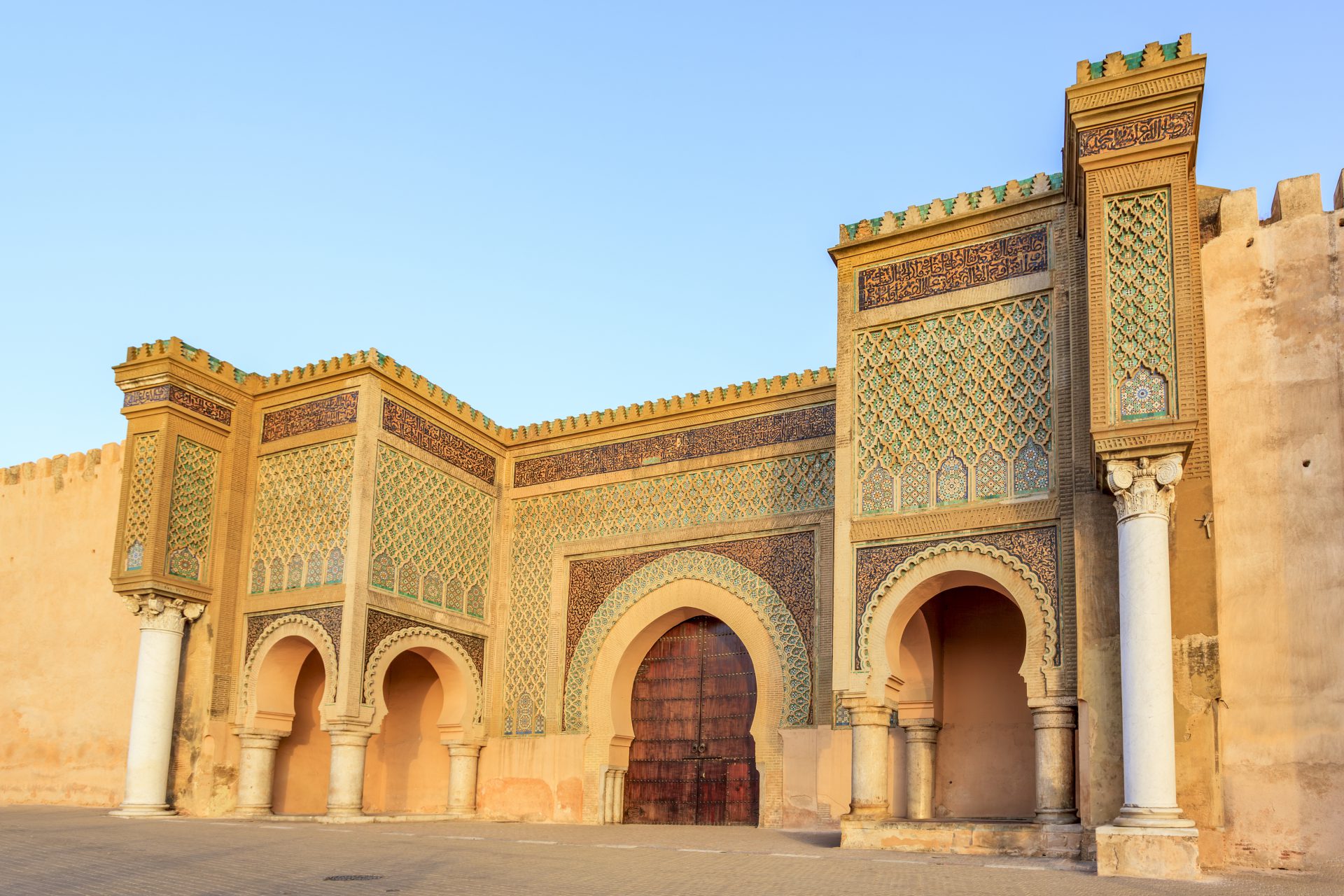
More tranquil than Fez, this imperial city is renowned for the magnificent Bab Mansour, the lively El Hedim Square, the impressive granaries of Moulay Ismail, and its charming historic medina.
Volubilis & Moulay Idriss Zerhoun
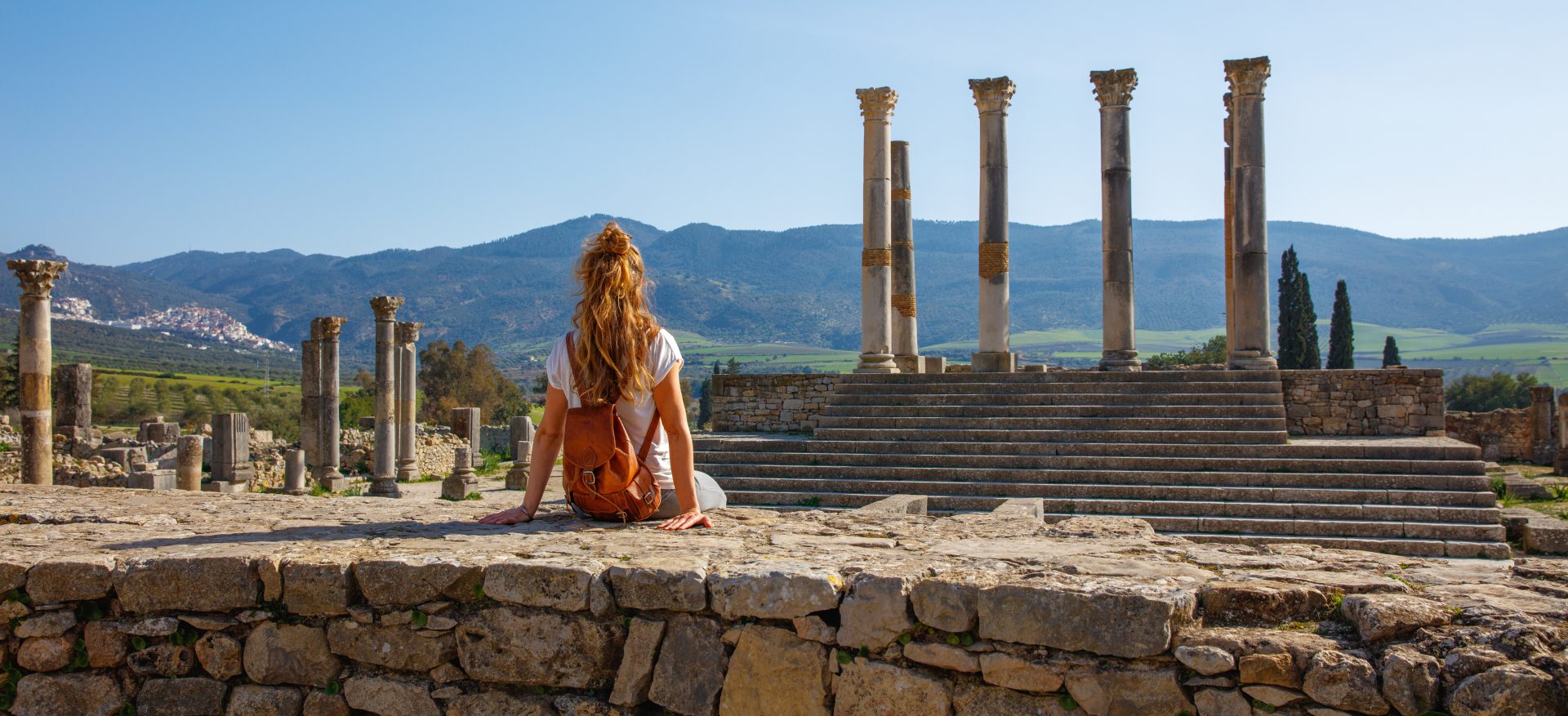
Explore the remarkably preserved Roman ruins of Volubilis, a UNESCO World Heritage Site, before continuing to the nearby holy town of Moulay Idriss Zerhoun, nestled among the rolling hills of the Zerhoun Massif.
Sefrou
Around 30 kilometres from Fez, this charming riverside town is known for its peaceful medina and picturesque waterfalls.
Ifrane & Azrou
Head into the Middle Atlas, where cedar forests inhabited by Barbary macaques, the distinctive architecture of Ifrane, and the rich Berber craftsmanship of Azrou reveal a different side of Morocco.
Moulay Yacoub
Just 20 kilometres from Fez, this renowned spa town is famous for its naturally heated thermal springs (54°C) and the Vichy Thermalia Spa Hôtel Moulay Yacoub Fès, where thermal therapies, wellness and relaxation come together.
Roman ruins of Volubilis.
Bab Mansour Gate, Meknes.
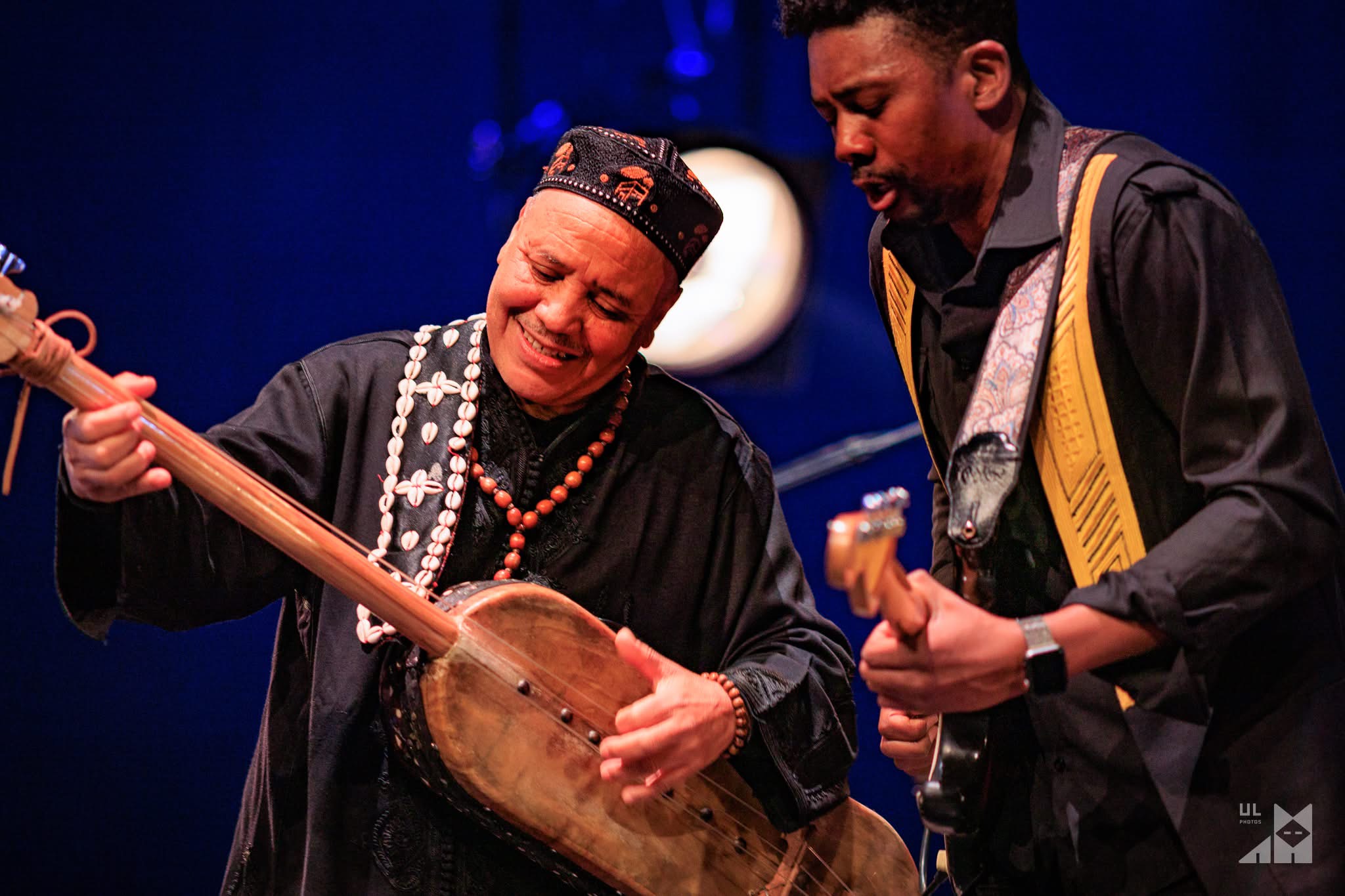
A Gnawa artist, one of the leading figures on Morocco’s music scene and an ambassador…
Autumn settles gently over Dakar. The Atlantic breeze softens, daylight lingers over the city’s corniches,…