RABAT
RABAT WHEN HISTORY BECOMES LANDSCAPE
A city of light, Morocco’s cultural capital, listed as a UNESCO World Heritage Site since 2012 as a “modern capital and historic city”, Rabat unfolds a singular charm, more understated than spectacular. Here, the medina, the kasbah, grand monuments, the new town and contemporary districts compose a single, continuous story, serene and luminous. A capital to be discovered differently, for what it reveals gently rather than what it imposes.
Our Guide
A native of Rabat, Professor Imane Bennani reads her city as few can. An architect by training, a specialist in urban geography, deeply committed to Moroccan heritage and its preservation, she reveals its balances, inheritances and transformations with remarkable finesse. Dean of the School of Architecture in Rabat at International University of Rabat, holder of the UNESCO Chair “Historic Urban Landscape”, and director of the Urban Innovation & Heritage Laboratory (UIHlab), she also played a key role in Rabat’s inscription on the World Heritage List in 2012.
In her company, Rabat reveals its depth, coherence and unexpected perspectives.
A PEACEFUL CAPITAL, MASTERED BALANCE
“Rabat is exceptional: it is a capital, yet also a peaceful city that breathes and allows one to breathe, shaped by a coherent urban composition that leaves space for both pedestrians and greenery,” notes Imane Bennani. The city also impresses in its ability to reconcile opposites without ever setting them against one another, through a subtle balance between nature and culture, vegetal and mineral, heritage and development, history and the contemporary.
A CONTINUOUS TRANSFORMATION, WITHOUT RUPTURE
Rabat is also a metropolis in continuous transformation, deliberate and carefully controlled. The city moves forward, projects itself into the future and integrates modern developments without erasing what already exists or the past of which it is deeply proud. This is its strength: moving towards the future without rupture, allowing one to walk through an urban continuum that stretches from Antiquity to the buildings of the twenty-first century.
CHELLAH, WHERE TIME OVERLAPS
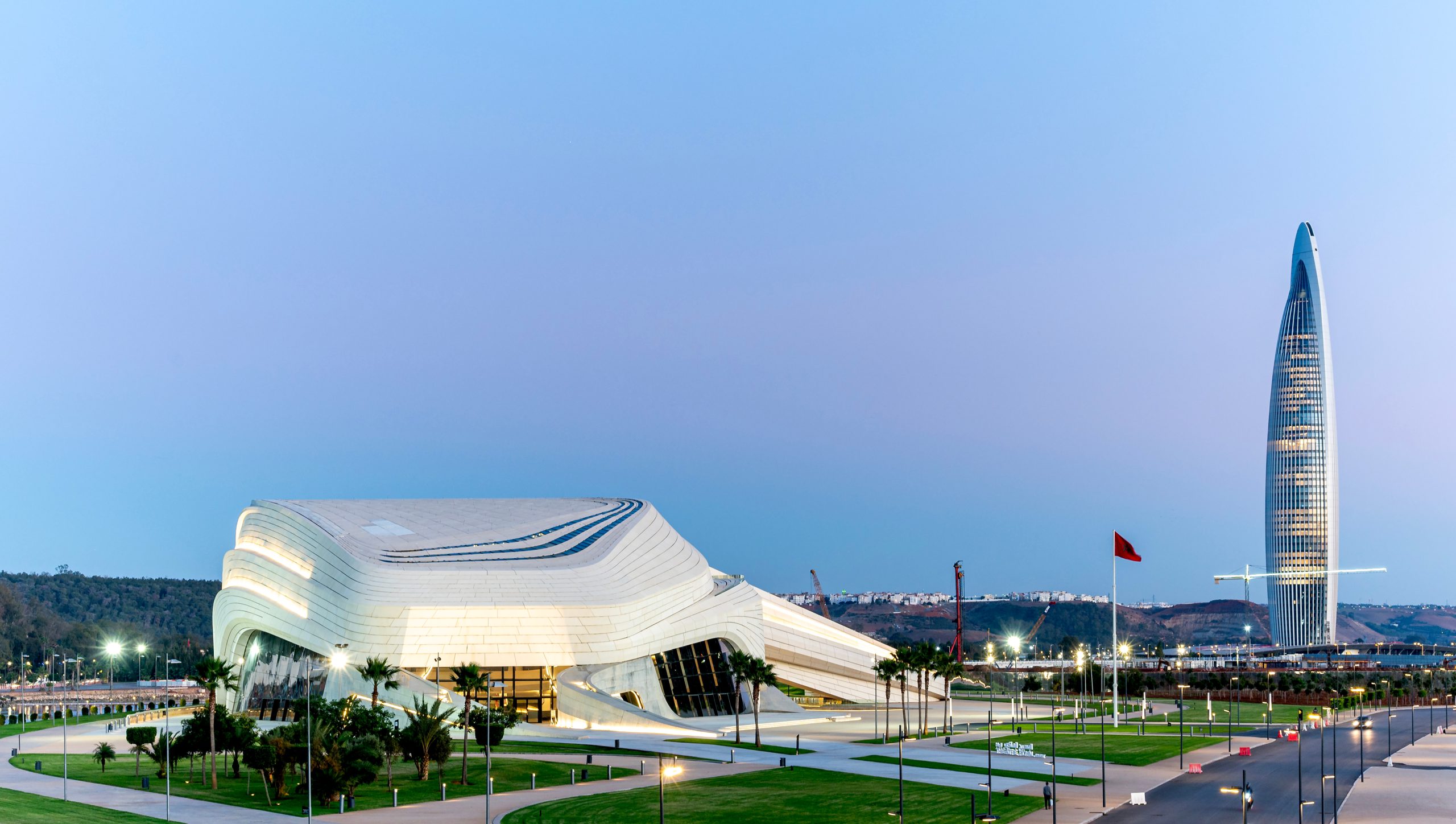
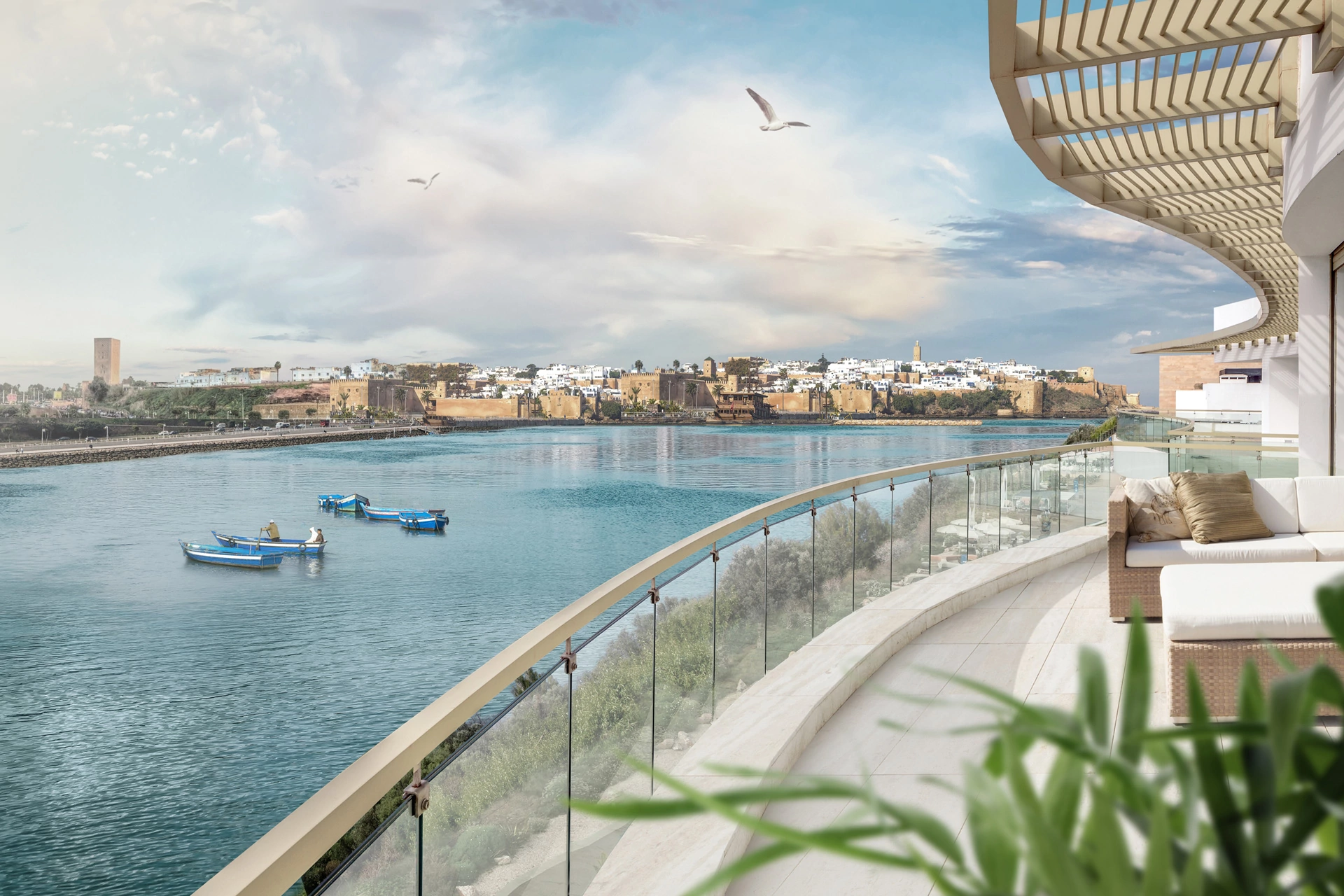
At the Chellah, Antiquity meets the thirteenth century. The remains of the Roman city converse with the Mérinid royal necropolis, within a site inhabited by nature, where one immediately senses what defines Rabat, a serenity born of the alliance between history and vegetation. Beyond, the view opens onto the Bouregreg Valley, where the skyline shifts towards the twenty-first century, marked by the Mohammed VI Tower and the Grand Theatre of Rabat. More than a river, the Bouregreg forms a true urban seam between Rabat and Salé, a place of movement and respite, where open-air, sweeping views and the life along the quays capture the gentle rhythm of the city.
THE MEDINA OF RABAT: HARMONY BEHIND THE LABYRINTH
The journey continues into the medina of Rabat. At first glance, it appears as a maze, yet, as Imane Bennani reveals, a subtle order gradually emerges through the hierarchy of its streets and urban functions. Behind the understated white walls lie houses, riads and foundouks far more ornate than one might expect. Beyond the angled entrance comes the surprise of an open patio and an architecture that invites contemplation. Arches, stonework, wood and wrought iron come together, marked by the restrained elegance of Almohad heritage. Then colour and vitality return, particularly along the Rue des Consuls, where carpets, embroidery and other expressions of local craftsmanship animate the space.
KASBAH OF THE OUDAYAS: AT THE ORIGINS OF RABAT
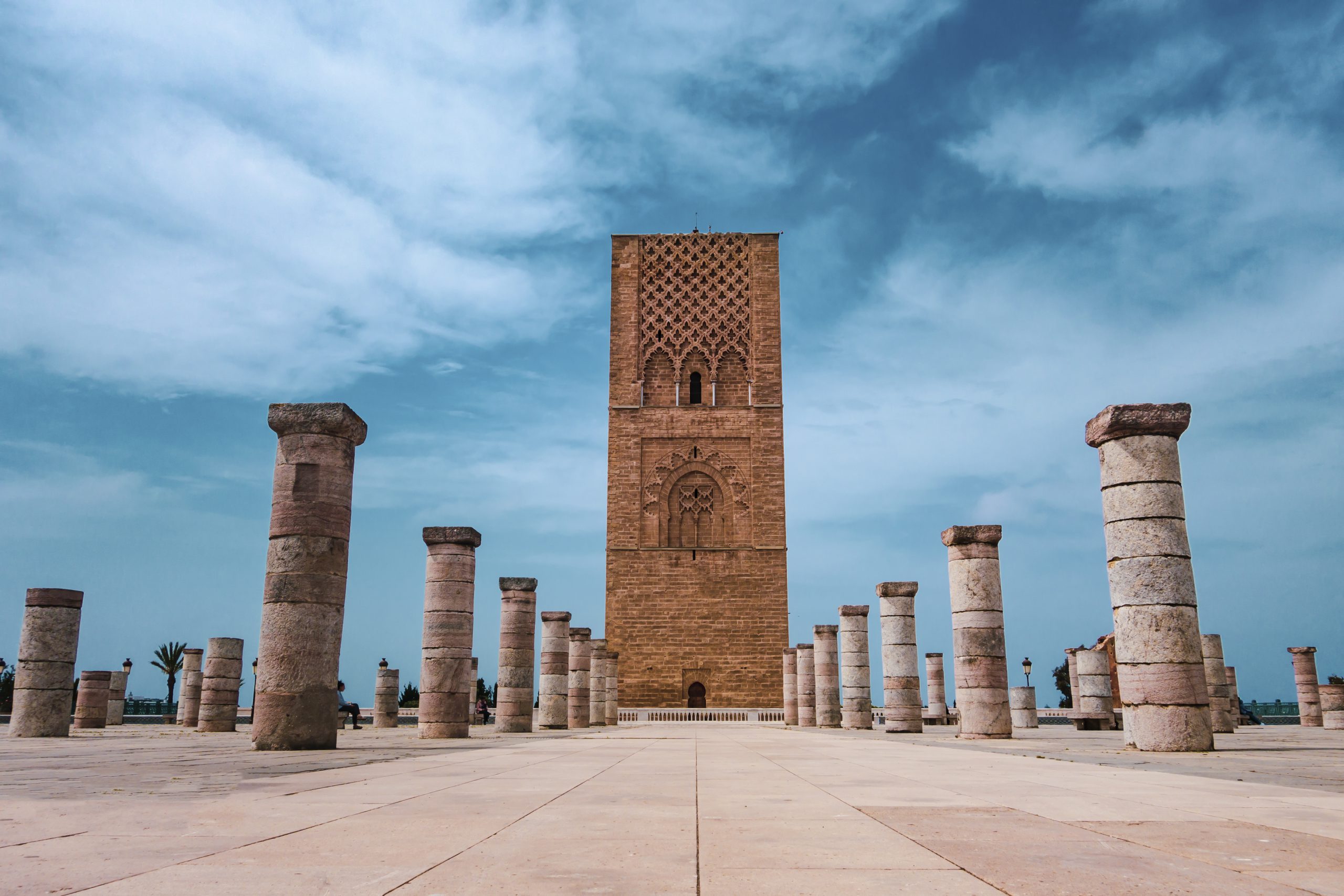
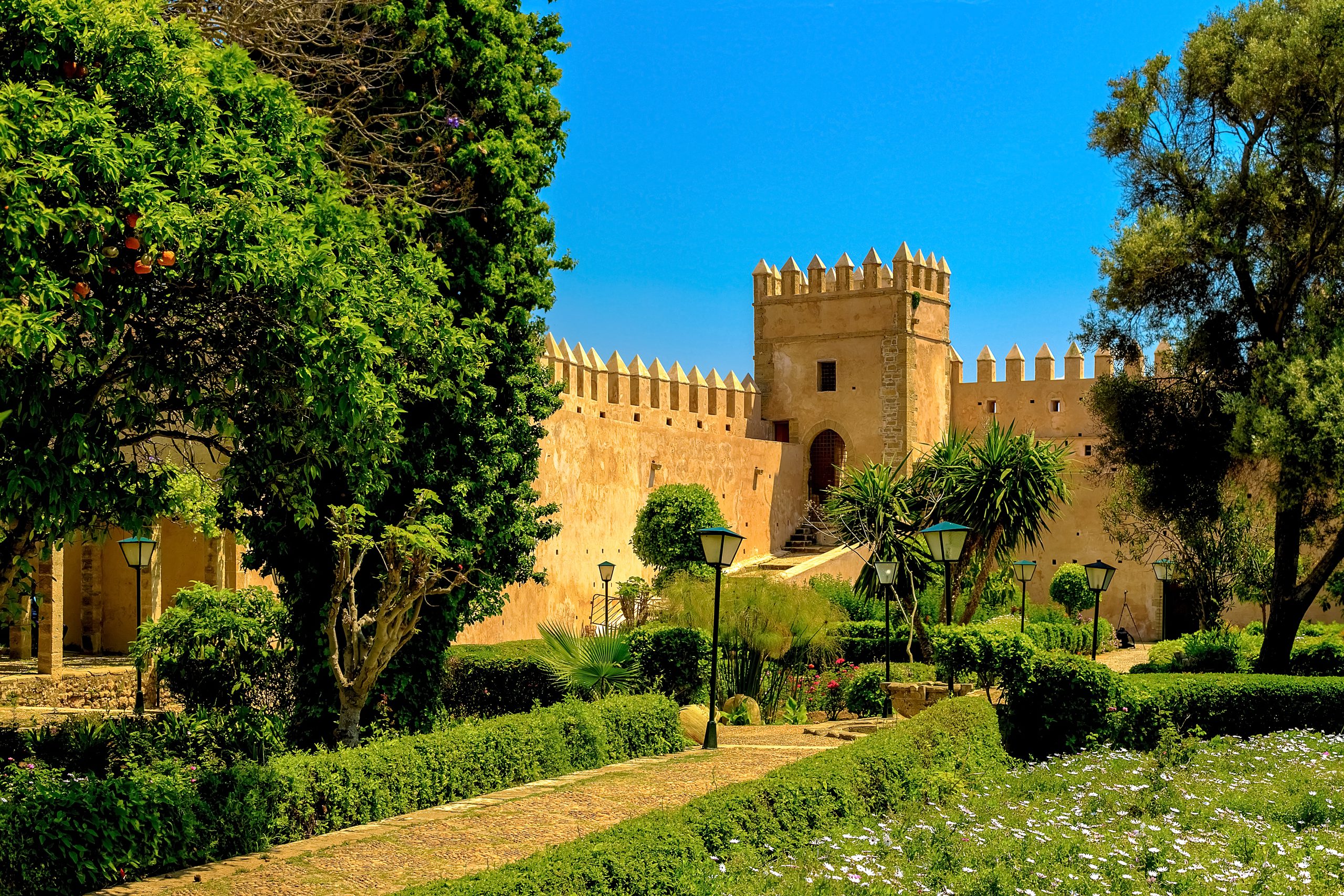
Climbing towards the Kasbah of the Udayas reveals the very birthplace of Rabat: Ribat al-Fath, the “fortress of victory”, established at the end of the twelfth century by the Almohad sultan Yaqub al-Mansur. This founding core laid the groundwork for the city, symbolically recalling Andalusian conquests.It is also here that Rabat’s monumental ambition takes shape, through its vast ramparts and the mosque of which the Hassan Tower remains today, echoing both the Giralda of Seville and the Koutoubia of Marrakech.Within the narrow streets of the kasbah, white and blue dominate, recalling the arrival of the Moriscos from Andalusia in the seventeenth century, some of whom became formidable corsairs. This layered history gives the kasbah its singular identity.
A PROMONTORY BETWEEN RIVER AND OCEAN
Suddenly, the space opens. At the Semaphore square, the kasbah becomes a belvedere. Around thirty metres above ground, the view takes in the Bouregreg, the ocean and, opposite, the medina of Salé. A spectacular breath at the heart of the city.
Here, time slows. A glass of mint tea, a few pastries, an exceptional panorama, the quiet charm of the Café Maure. Everything invites contemplation. Between history, landscape and a gentle art of living, the Kasbah of the Oudayas offers one of Rabat’s most sensitive and emblematic faces.
THE NEW TOWN: A RESPECTFUL MODERNITY
At the beginning of the twentieth century, Rabat entered a new era. The capital embraced an avant-garde urbanism inherited from the French Protectorate, conceived in continuity with history rather than in rupture. Parks, gardens and wide, shaded avenues form a true garden city, designed in relation to relief, perspectives and views, linking neighbourhoods harmoniously while showcasing ramparts and historic monuments. A landscape-driven urbanism where modernity and heritage engage in a refined dialogue.
A DIALOGUE OF STYLES
This vision extends into architecture. The twentieth-century centre becomes an open-air museum, showcasing an architecture that brings together modernity and traditional craftsmanship, presenting a rich diversity of styles, including neoclassical, Art Nouveau, Art Deco, neo-Moorish and modernist, all enriched by Moroccan craftsmanship.
Facades combine arches and traditional motifs with modern forms. Still within the new town, from the Hassan Tower, a masterpiece of Almohad architecture, to the Mausoleum of Mohammed V, the quintessence of Alaouite architecture, centuries respond to one another in remarkable continuity. Rabat thus asserts a unique signature: a city in constant evolution, nourished by its history.
A CONTEMPORARY MOMENTUM
Today, the city affirms its contemporary dynamism through new districts, modern silhouettes and forward-looking projects. Stadiums, recent buildings and malls integrate naturally into a landscape structured by parks and encircled by a genuine green belt.
Along the redeveloped corniche, where the day gently comes to a close, the Hervé fort stands in dialogue with new constructions that seem to move along the water’s edge.
And it is perhaps at dusk, when the city lights begin to enhance its monuments, that Rabat reveals itself most fully: a harmonious and peaceful capital that understands that the most meaningful form of modernity is one that erases nothing, but instead casts new light on what came before
Imane Bennani’s Addresses
Where to eat and enjoy a coffee
Le Ziryab
In the heart of the medina, an address that extends the experience of historic Rabat with understated refinement.
Le Dinarjat
A traditional setting and a graceful introduction to the Moroccan art of living.
La Marsa
A light-filled space opening onto Rabat’s urban landscape.
Dar al Karam Fatima
In the Oudayas, a discreet and peaceful retreat, suspended between horizon, simplicity and the memory of place.
Café Maure
An absolute classic, where mint tea overlooking the Bouregreg is enough to capture the poetry of Rabat.
Where to stay
Rabat Marriott Hotel
In Agdal, an ideal address to experience a Rabat that is vibrant, everyday and deeply lived-in.
Le Terminus
In the city centre, a gateway to twentieth-century Rabat, between the station, historic avenues and urban perspectives.
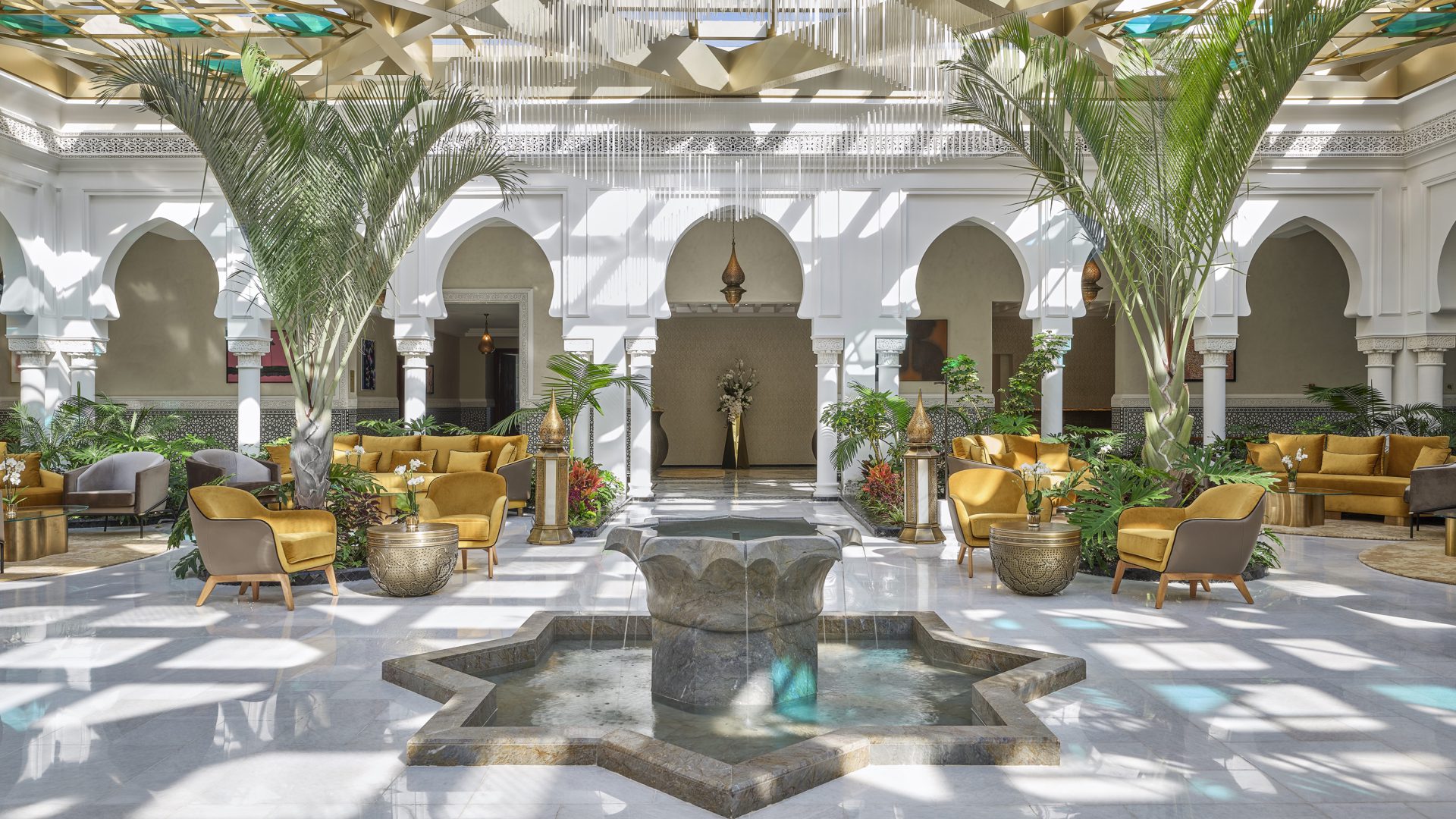
Fairmont La Marina Rabat-Salé
A spectacular address from which to embrace the river and read Rabat in its full landscape dimension.
Conrad Rabat Arzana
Further south, a serene retreat reconnecting with the city’s maritime and luminous character.
Kasr Al Bahr Four Seasons Hotel Rabat
An exceptional setting where history, heritage and an opening onto the sea meet.
The View Rabat
A stopover to discover Hay Riad and the expression of a contemporary, dynamic Rabat.
Hanout Marrakech Sunlit Silhouettes Flowing dresses, natural fabrics and impeccable cuts define a summer wardrobe…
© Isabel Muñoz This summer, Tangier enriches its cultural landscape with a major new event:…