ZHOR RAÏS : FORTY YEARS IN THE SERVICE OF THE MOROCCAN CAFTAN
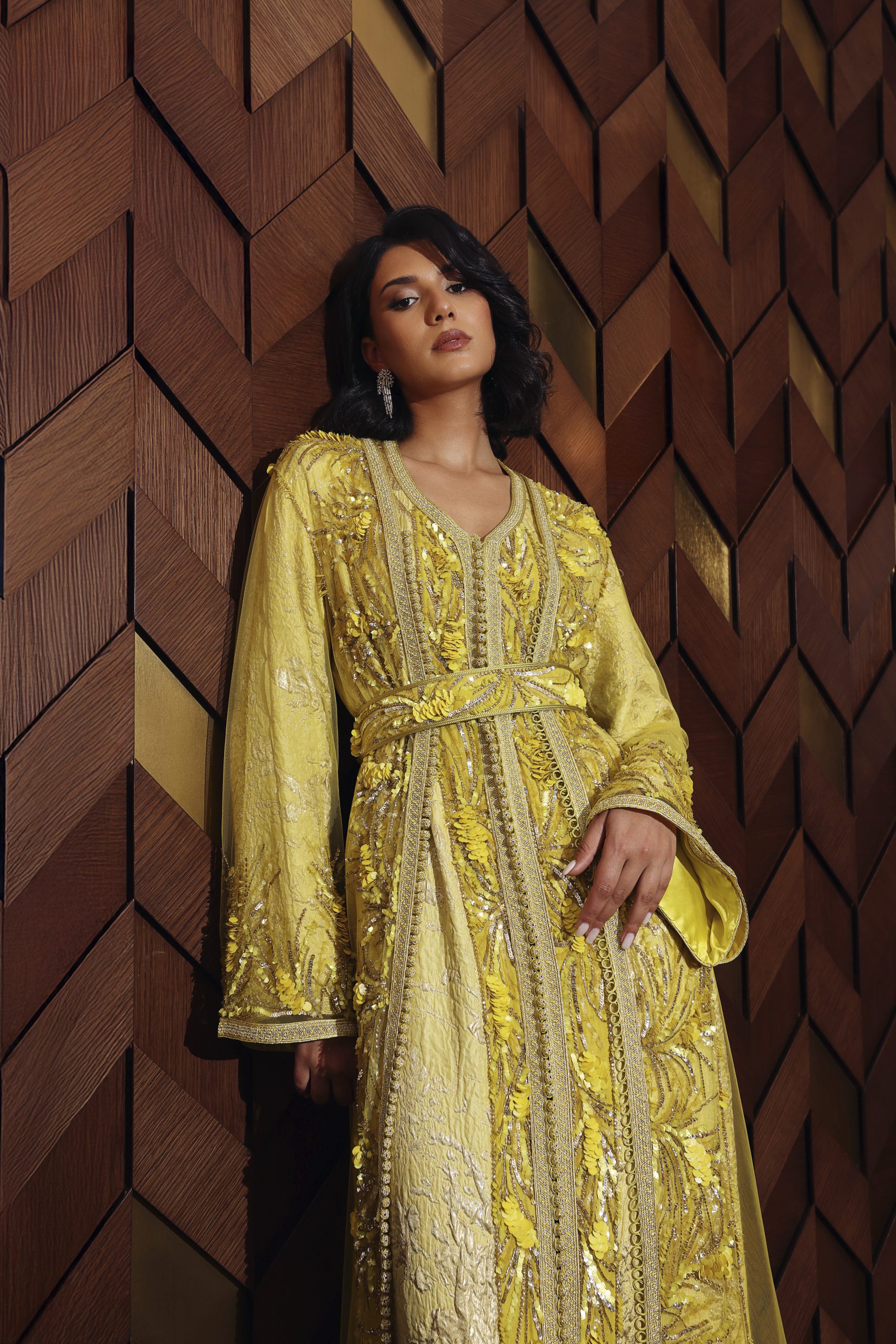
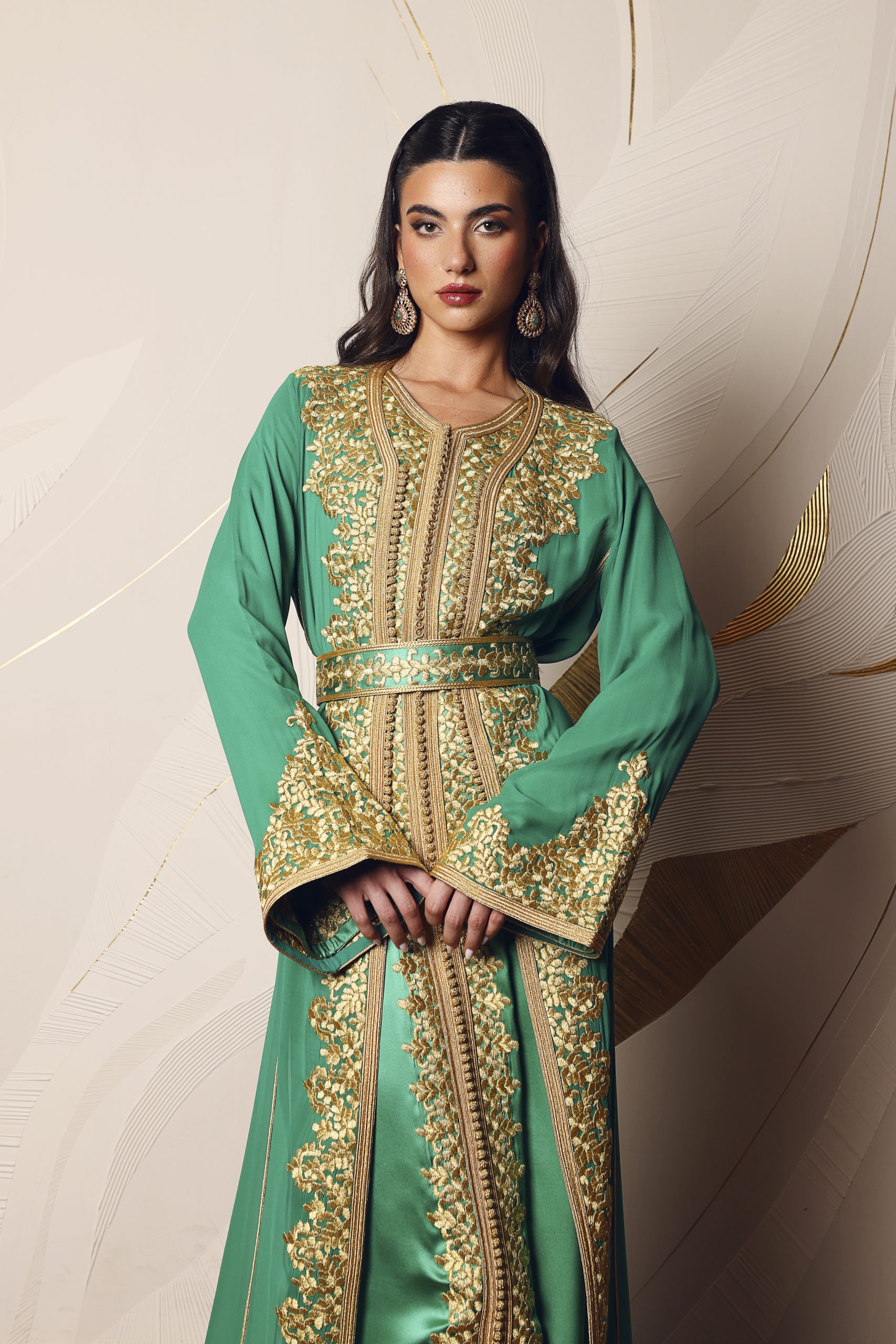
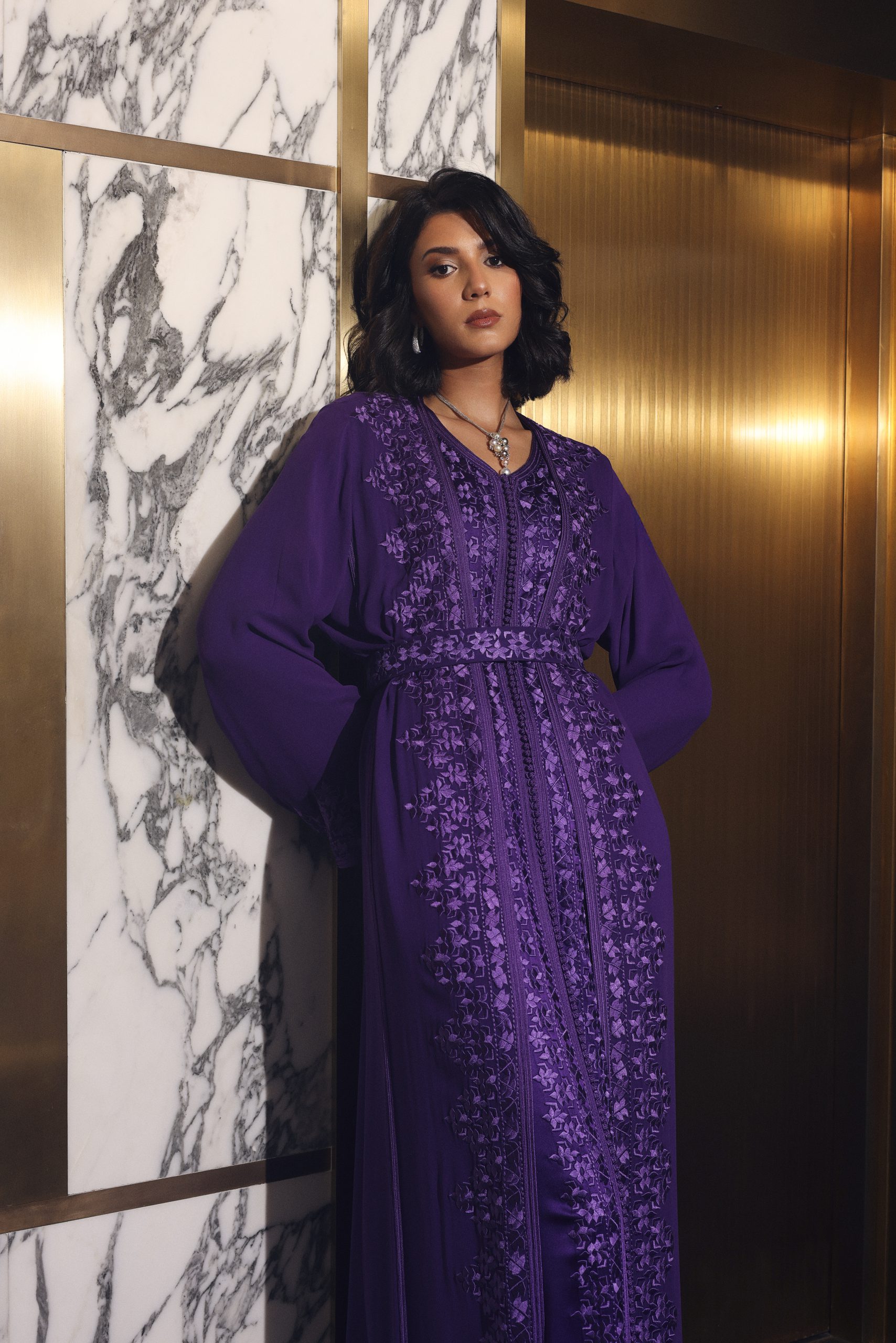
An icon of the Moroccan caftan, Zhor Raïs is among those designers who have succeeded in evolving its lines without ever betraying the craft’s DNA. One of the very first creators to found a fashion house dedicated exclusively to the caftan exactly forty years ago, she has since combined tradition, boldness, and an uncompromising attention to detail. A visionary figure, she was also among the pioneers in bringing the caftan to the international stage, notably through a fashion show organised by Royal Air Maroc in Muscat in 1988.
This year once again, she surprises with a foray into the world of the Spanish artist Salvador Dali, whose sculptures inspire a collection that reinvents the caftan through new forms—more contemporary, more artistic, and more unexpected.
WHERE DID YOUR PASSION FOR DRESSMAKING COME FROM?
Throughout my childhood, sewing was everywhere. My father was a tailor, my mother made us little dresses, and my maternal grandmother did crochet. From a very young age, I was already enjoying dressing my dolls with scraps of fabric. I remember asking my mother to take me along to learn basic stitching with other young girls who were also discovering the craft. It was an experience that nurtured my passion.
YOU WERE AMONG THE FIRST TO CHALLENGE THE CODES OF THE TRADITIONAL CAFTAN. WHAT GAVE YOU THAT BOLDNESS?
I was driven by the desire to modernise the caftan while remaining faithful to tradition. Forty years ago, I wanted to show that the caftan could be far more than an ancestral garment. Playing with codes, colours and materials was, for me, a way of paying tribute to heritage while firmly anchoring it in our time.
WHAT IS YOUR DEFINITION OF THE CAFTAN?
For me, the caftan is part of Morocco’s soul. It carries within it many stories, those of celebrations, weddings and family traditions passed down through generations. Every motif, every embroidery, every detail holds meaning. It is this silent language that makes it unique. What moves me deeply, too, is its diversity: each city has its own signature: Fez, Rabat, Marrakech, Tetouan, Tangier. The caftan is both a symbol of elegance and a powerful marker of our identity.
YOU ADVOCATE A CAFTAN THAT IS ENTIRELY HANDMADE.
WHY IS THIS APPROACH, IN YOUR VIEW, NON-NEGOTIABLE?
Because the DNA of the caftan lies in Moroccan craftsmanship. Its beauty is born of the maâlem’s work—sometimes without a conventional academic background, yet endowed with rare and exceptional mastery—through which a true work of art comes into being. Every stitch tells a story; every embroidery makes each piece unique.
In my creative process, master artisans are not mere executors; they are true co-creators. Their know-how gives form to my ideas. Without them, the caftan would lose its soul: it is their hands that transform material into emotion.
YOUR EXHIBITION DALI. DIALI – THE FABRIC OF DREAMS, PRESENTED AT THE NATIONAL MUSEUM OF JEWELLERY IN RABAT, CELEBRATES THE 40TH ANNIVERSARY OF YOUR FASHION HOUSE. HOW DO YOU SEE THESE CAFTANS THAT ENTER INTO DIALOGUE WITH DAL.’S SCULPTURES: AS MUSEUM PIECES OR AS CEREMONIAL GARMENTS?
These caftans were conceived in this dual spirit: as works of art worthy of a museum, and as silhouettes designed to be worn on exceptional occasions. It was important to me that Moroccan women should immediately recognise them as authentic caftans—faithful to their heritage and intended to be worn. At the same time, each piece was conceived as a sculptural object, one that can also be displayed at home on a mannequin, much like a work of art. The exhibition is also intended to travel, in Europe and beyond, in order to showcase Moroccan craftsmanship on the international stage.
IF YOU WERE TO PASS ON JUST ONE VALUE OF THE CAFTAN TO FUTURE GENERATIONS, WHICH WOULD YOU WISH TO PRESERVE AT ALL COSTS?
Without hesitation, the authenticity of hand craftsmanship. A caftan is not merely a silhouette: it is time, precision, and the sensitivity of master artisans. Every stitch carries an emotion; every detail reveals the intelligence of the hand. To preserve this truth is to preserve a living heritage, one that is profoundly human.
Hanout Marrakech Sunlit Silhouettes Flowing dresses, natural fabrics and impeccable cuts define a summer wardrobe…
© Isabel Muñoz This summer, Tangier enriches its cultural landscape with a major new event:…