Farid and Dina Bensaïd : music as a living legacy
Some family stories are not shaped solely by words, but by music. The story of Farid Bensaïd and his daughter Dina is woven through a rare dialogue between two generations, two artistic paths and a shared devotion to the collective.
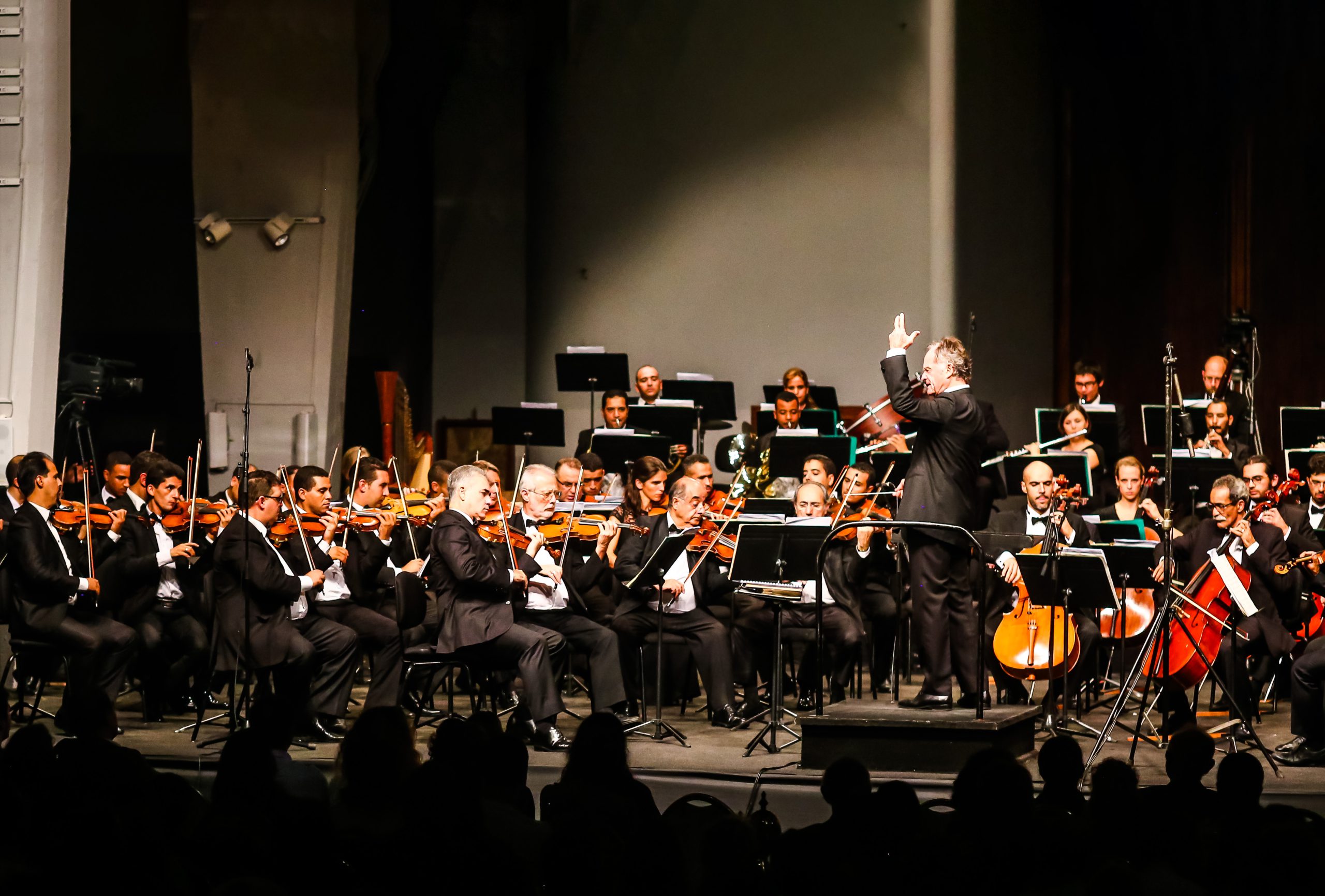
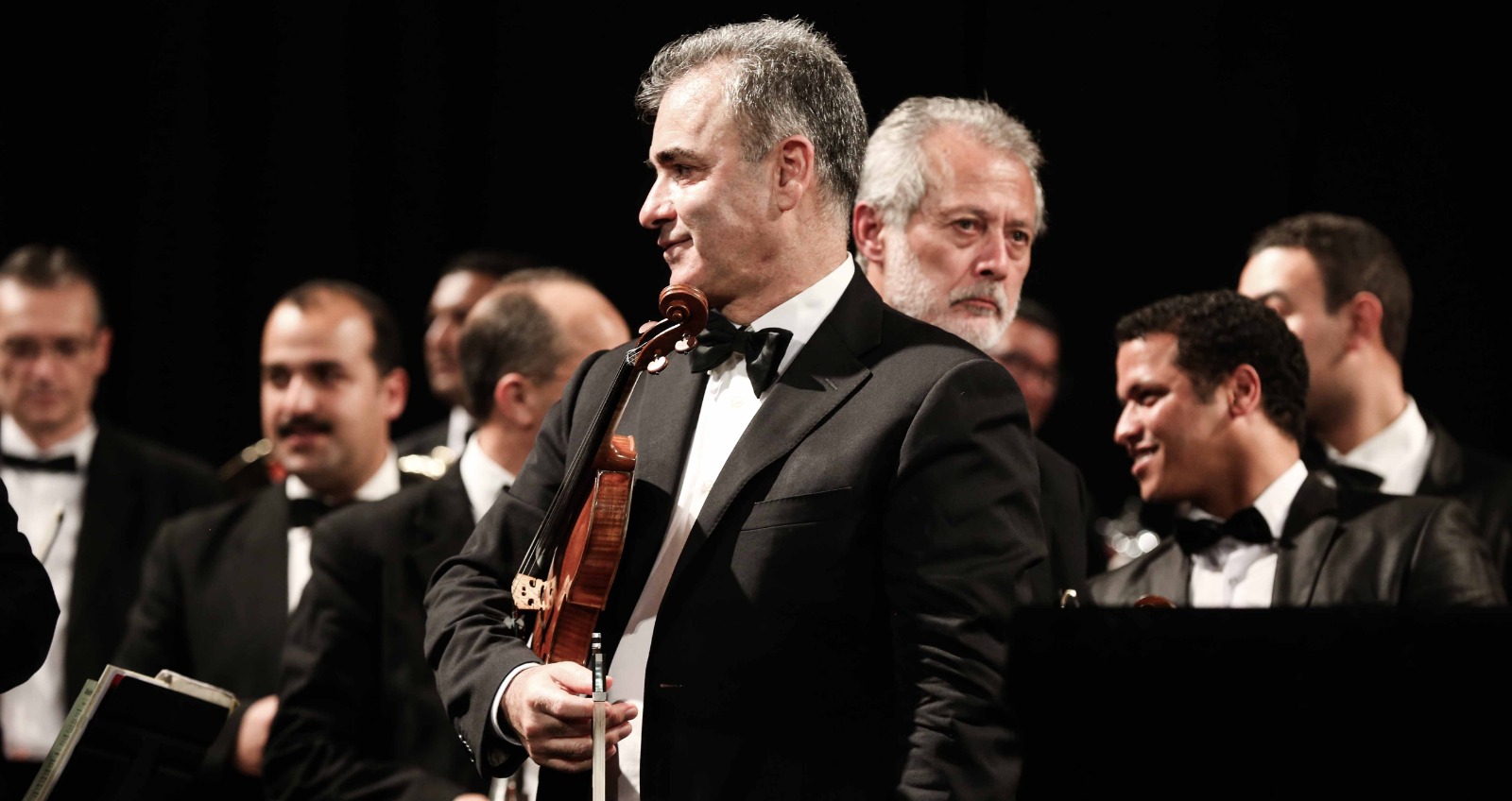
A violinist, Farid Bensaïd is the founder of the Moroccan Philharmonic Orchestra (OPM) and the Tenor Foundation for Culture (FTC). A pianist and conductor, Dina Bensaïd now leads these institutions, extending this momentum through her own artistic sensibility.
Throughout this shared conversation, music reveals its most essential dimension: a living transmission, a deep sense of commitment, and that singular capacity to transcend the stage, to bring people together, to uplift, and to allow emotion to endure.
FARID BENSAÏD, THIRTY YEARS AGO YOU FOUNDED MOROCCO’S FIRST PROFESSIONAL PHILHARMONIC ORCHESTRA. WHAT WAS THE DRIVING FORCE BEHIND THIS INITIATIVE?
Quite simply, a love of music. I was fortunate to meet passionate individuals who taught me what it truly means to share music, to experience it collectively and to pass it on. There was also an entrepreneurial instinct: the bold venture of creating an orchestra and placing it at the service of something greater. I held a firm conviction that Morocco needed its own philharmonic orchestra. Few believed in it, but I knew that classical music, universal in essence, had a rightful place here.
We succeeded in forming a true “national ensemble” of more than sixty Moroccan musicians, who had been waiting for the opportunity to come together and play as one.
DINA BENSAÏD, YOU HAVE BECOME MOROCCO’S FIRST FEMALE CONDUCTOR. WAS IT EVER AN OBVIOUS PATH?
I am not sure it was ever an obvious choice, nor something I actively sought. What fascinated me above all was the orchestra itself. After training as a pianist—an instrument that is, by nature, very solitary—I felt the desire to understand this vast “sound machine”: how it works, how it breathes. At first, it was a musical curiosity, almost technical in nature, a way to enrich my playing and to learn to listen differently.
What helps me is remembering that I step onto the podium in the service of the music and of the musicians: my baton holds no greater value than their bows. We are there together to serve a work. But above all, I remain a pianist, and if I had to choose, I would not hesitate.
WHY DID YOU CREATE THE MAZAYA SOCIAL AND PROFESSIONAL INTEGRATION PROGRAMME?
Farid Bensaïd: Mazaya was born of a simple conviction: music can change a life trajectory. The idea was to make it a social lever, a tool for inclusion and a shared language. The programme is aimed at young people in vulnerable situations who are no longer in school, for whom this path becomes a means of social and professional integration.
It also responds to a more structural need: to train professional musicians in Morocco to an international level. Mazaya offers a complete and structured form of support, within a stable and demanding framework, and with the necessary resources to pursue serious training. It is an artistic, social and educational project, and one that is profoundly human.
Farid Bensaïd: The challenges are many and ongoing. Some countries carry centuries-old traditions of classical music; we observe them and learn from them, without seeking to reproduce everything. Our ambition lies elsewhere: to build something that truly reflects who we are, and to foster the emergence of a genuine Moroccan musical identity. Understanding who we are, and finding how to express it through music, is our guiding thread.
WHAT ARE THE MAIN OBJECTIVES TODAY OF THE MOROCCAN PHILHARMONIC ORCHESTRA AND THE TENOR FOUNDATION FOR CULTURE?
Farid Bensaïd: The challenges are many and ongoing. Some countries carry centuries-old traditions of classical music; we observe them and learn from them, without seeking to reproduce everything. Our ambition lies elsewhere: to build something that truly reflects who we are, and to foster the emergence of a genuine Moroccan musical identity. Understanding who we are, and finding how to express it through music, is our guiding thread
THE ORCHESTRA IS CELEBRATING ITS 30TH ANNIVERSARY THIS YEAR. WHICH CONCERTS HAVE MOST MARKED ITS HISTORY, AND WHY?
Dina Bensaïd: One concert stands out as a defining moment. In 2016, under the direction of Jean-Claude Casadesus, we performed Beethoven’s Seventh Symphony, followed by an arrangement by the Moroccan Philharmonic Orchestra of Caccini’s Ave Maria, interweaving chants from the three major religions.
It is this power to bring people together that touches us deeply, in an art form that transcends us.
WHAT DO YOU CONSIDER TO BE THE OPM’S GREATEST ACHIEVEMENT?
Farid Bensaïd: Having endured over time, and still existing today, carried by a curious and loyal audience, present at every performance.
FOR THE NEXT THIRTY YEARS, WHAT WISH WOULD YOU MAKE FOR THE ORCHESTRA?
Dina Bensaïd: That it endures and lives on beyond us. That it continues to grow, to shine, to resonate, and that it may welcome the greatest works alongside the greatest soloists.
BEYOND THE ORCHESTRA, WHAT CULTURAL DREAM WOULD YOU STILL LIKE TO SEE GROW IN MOROCCO?
Farid Bensaïd: That of a Morocco that shines through its inventiveness. Within our traditions lies a unique creative force, a way of making and imagining that is entirely our own. The dream is to continue forging our path, while remaining true to who we are.
A RICH AND MULTIFACETED 2025-2026 SEASON
Following The Nutcracker ballet, presented in late January at the Mohammed V National Theatre in Rabat, February opened with Choeurs à Coeurs, a tour by the Moroccan Philharmonic Choir celebrating the power of the collective
voice under the direction of conductor Anass Ismat.
In early March, chamber music takes centre stage with the Concerts de Poche #3 cycle in Marrakech, Casablanca and Rabat, featuring works by Schubert and Beethoven performed by Farid Bensaïd and Serge Moukarzel. From 30 March to 4 April 2026, the OPM Competition will, for the first time, devote an international edition to the cello, bringing together semi-finals, a grand final and a laureates’ concert, held under the auspices of the Academy of the Kingdom of Morocco. The season draws to a close from 19 to 22 May 2026 on a resolutely contemporary note with Fusion, as the Orchestre Philharmonique du Maroc welcomes Hoba Hoba Spirit for an unprecedented encounter between symphonic music and modern sounds in Agadir, Rabat and Casablanca.
A long-standing partner of the Moroccan Philharmonic Orchestra for over a decade, Royal Air Maroc supports the promotion and international reach of culture.
Further information is available at www.opm.ma.
Hanout Marrakech Sunlit Silhouettes Flowing dresses, natural fabrics and impeccable cuts define a summer wardrobe…
© Isabel Muñoz This summer, Tangier enriches its cultural landscape with a major new event:…