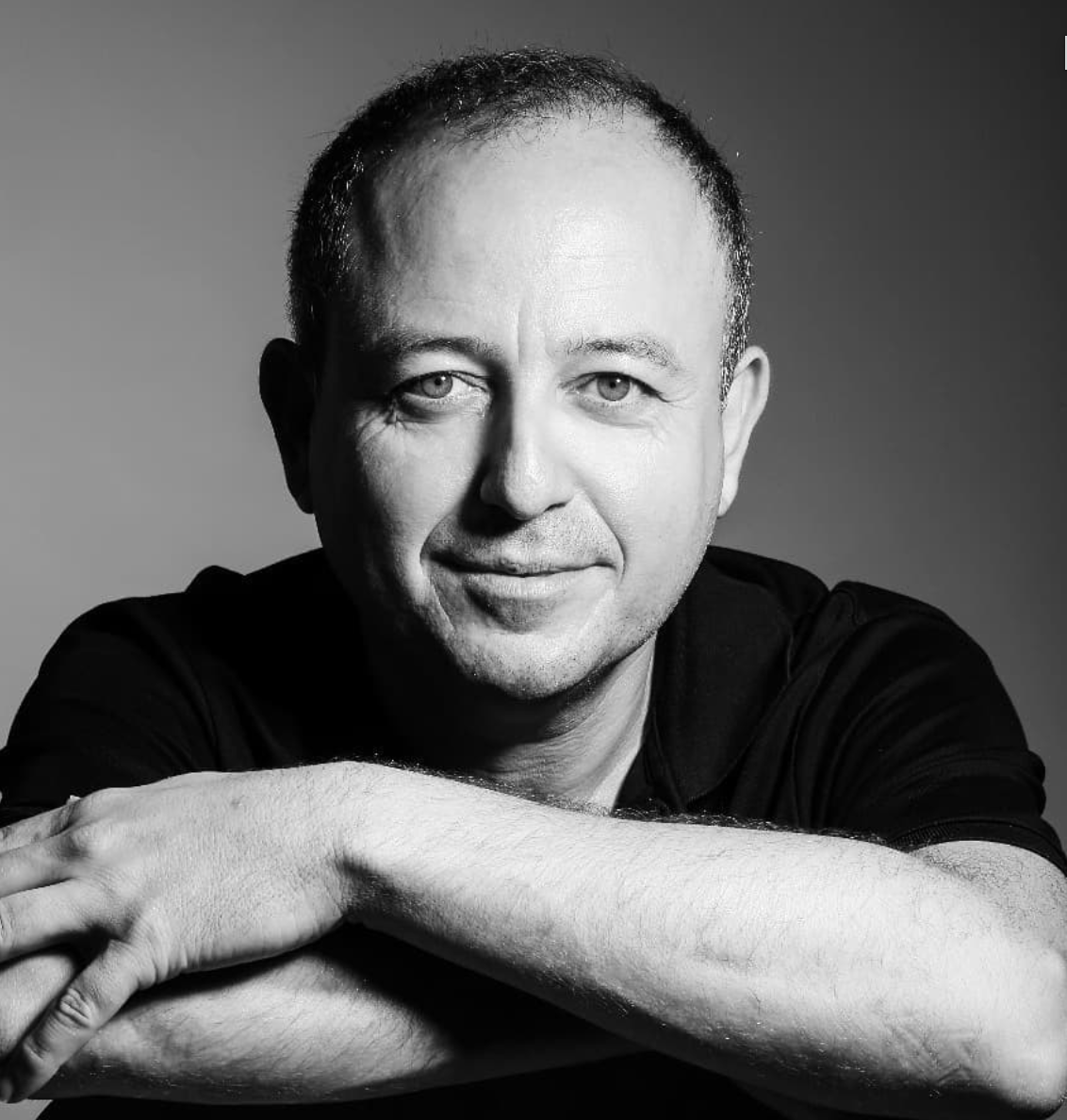
ALBERT OIKNINE : THE MOROCCAN CAFTAN IS BOTH TIMELESS AND RESOLUTELY CONTEMPORARY
A leading figure in Moroccan fashion, Albert Oiknine embodies a generation of designers who have brought the caftan into the language of contemporary fashion without ever betraying its soul. An heir to a savoir-faire passed down at the heart of the family atelier, he has succeeded in combining artisanal rigour with an international outlook, tradition with modernity. From ancestral heritage to the runways of fashion capitals such as Paris, London and New York, his career reflects how the caftan, by engaging with its time, has ensured its continuity and affirmed its status as an emblematic, living and universal piece.
HOW DID YOU FIRST ENTER THE WORLD OF THE CAFTAN AND COUTURE?
My mother was a dressmaker in Casablanca, so I grew up in an environment where textiles and dressmaking were part of everyday life. From an early age, I observed the artisans, the clients, the gestures and the exchanges. Without it ever being a deliberate choice, this environment shaped me. Later on, after completing my studies, I enrolled in a fashion school. I already had an instinctive understanding of clothing, but formal training allowed me to structure that knowledge, to enrich it with contemporary techniques and to better understand the evolution of couture.
HOW DID THE ENCOUNTER BETWEEN TRADITION AND MODERNITY TAKE SHAPE?
My mother’s atelier specialised in bridal and evening wear. I gradually brought in what I was learning, new methods, new techniques. It was the mid-1990s, a time when a new generation of Moroccan women was seeking a caftan that reflected who they were: modern and confident, yet faithful to its identity. This period also marked the emergence of women’s magazines, fashion series and runway shows that placed the Moroccan caftan in the spotlight. It encouraged us to pursue innovation while returning to the roots of this heritage, in order to reinterpret it with greater depth.
AS SOMEONE WHO CONTRIBUTED TO THE MOROCCAN CAFTAN’S NOMINATION FOR INCLUSION ON UNESCO’S LIST, WHAT, IN YOUR VIEW, DEFINES A MOROCCAN CAFTAN?
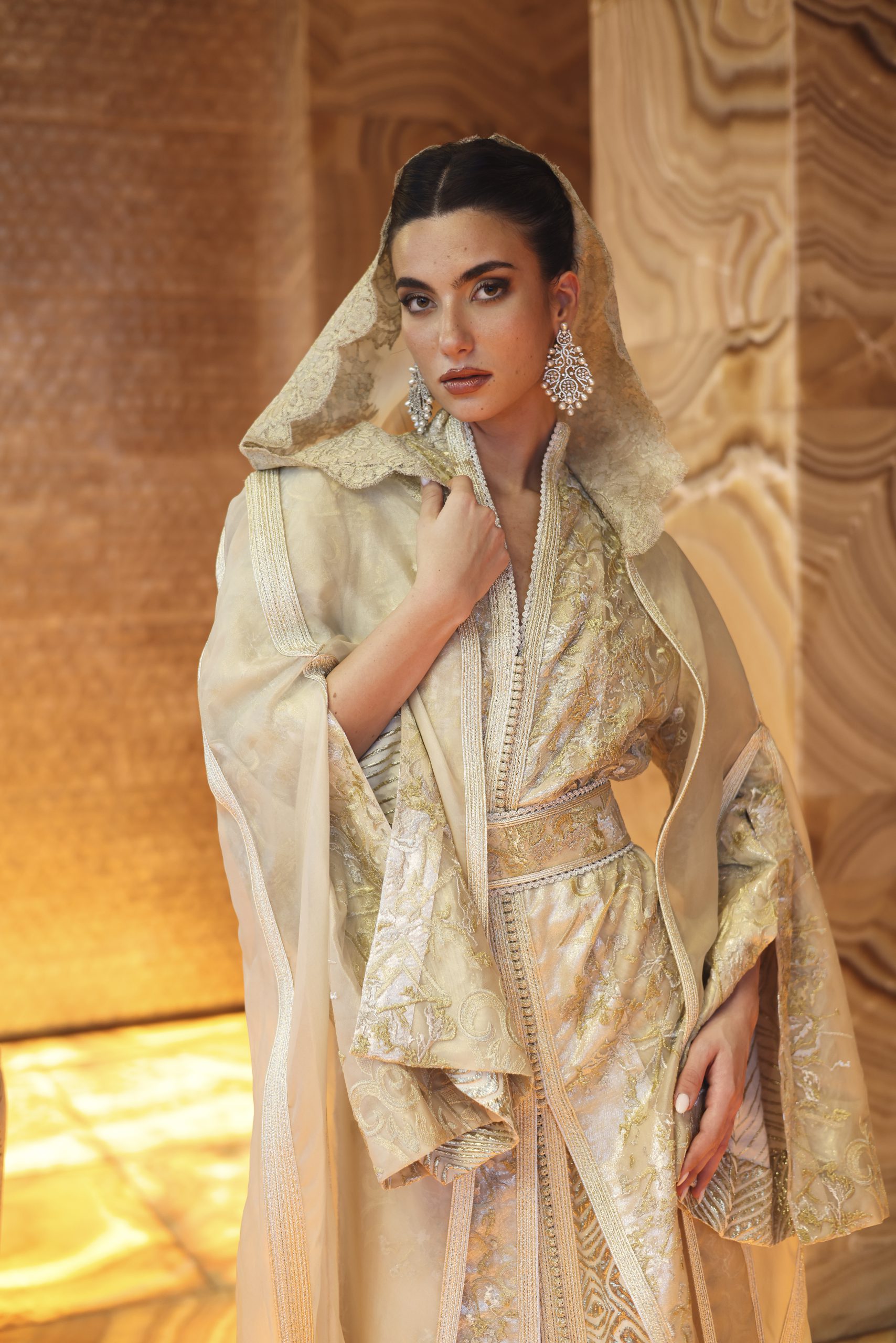
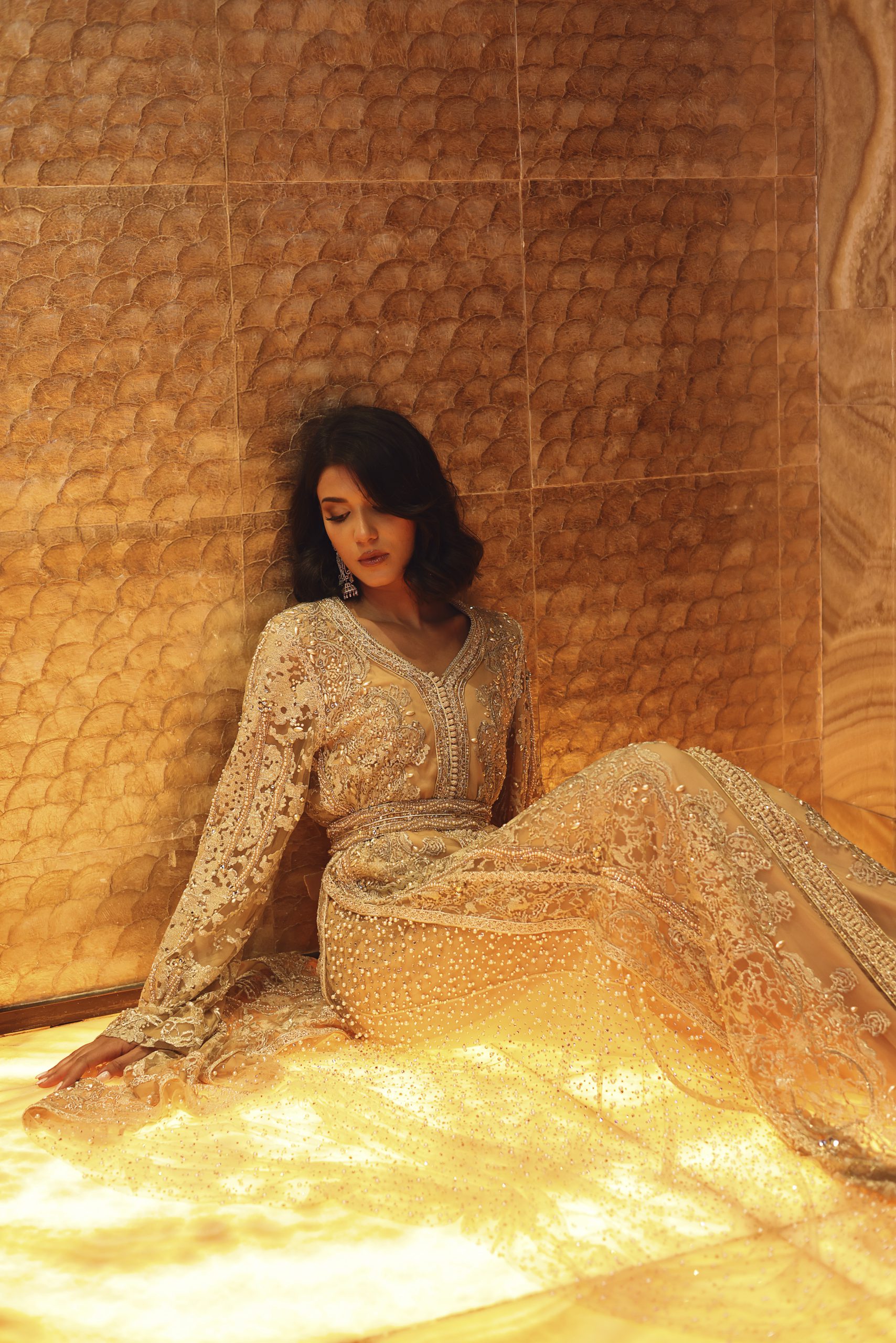
The caftan is fundamentally simple in its structure: a rectangular cut, straight sleeves, a buttoned fastening and a belt. What makes it unique is the artisanal craftsmanship that surrounds it. Every detail draws on a precise savoir-faire, whether embroidery, braiding, the Moroccan button or the belt itself. Each technique is mastered by a dedicated master artisan. This chain of transmission is exceptional and profoundly Moroccan. Moreover, regional specificities have been preserved over time. Each region has its own codes, whether in terms of colours, motifs or techniques. The embroideries of Fez, Rabat or El Jadida are immediately recognisable. This diversity represents an immense richness, one that has been safeguarded and gradually integrated over time.
YOU HAVE TAKEN THE MOROCCAN CAFTAN AROUND THE WORLD. WHY IS THAT IMPORTANT?
Because a heritage that does not circulate ultimately fades away. We have presented the Moroccan caftan on runways across the world, during fashion weeks and through collaborations with embassies and cultural institutions. It was essential to show that this ancestral garment could engage in dialogue with international fashion. Today, caftans can be found in many countries, but the Moroccan caftan remains the benchmark for refinement and artisan
WHAT DOES THE INSCRIPTION OF THE CAFTAN ON UNESCO’S REPRESENTATIVE LIST OF THE INTANGIBLE CULTURAL HERITAGE OF HUMANITY MEAN TO YOU?
felt an immense sense of pride in belonging to a community that keeps alive, on a daily basis, techniques inherited from an ancestral heritage, inseparable from Moroccan identity. This recognition honours a collective legacy that is living, transmitted and constantly reinvented. The Moroccan caftan is both timeless and resolutely contemporary: as long as it continues to evolve with its time without denying its roots, it will endure.
HAS THE MODERNISATION OF THE CAFTAN CHANGED ITS STATUS?
Yes, profoundly. By integrating the codes of contemporary fashion, including more fitted cuts, modern fabrics and on-trend colours, while fully respecting its structure and craftsmanship, the Moroccan caftan has become a desirable, wearable and adaptable garment. No longer confined to major traditional celebrations, it has established itself as a fashion piece worn around the world. It is precisely this transition into fashion that ensures its longevity.
In certain cities, such as Los Angeles, Moroccan-themed evenings are even organised around the caftan, where women take particular pride in wearing a beautiful Moroccan caftan.
Hanout Marrakech Sunlit Silhouettes Flowing dresses, natural fabrics and impeccable cuts define a summer wardrobe…
© Isabel Muñoz This summer, Tangier enriches its cultural landscape with a major new event:…