CHEF ANTO
CHEF ANTO : A CREATIVE AND INSPIRING VOICE OF THE AFRICAN CULINARY SCENE
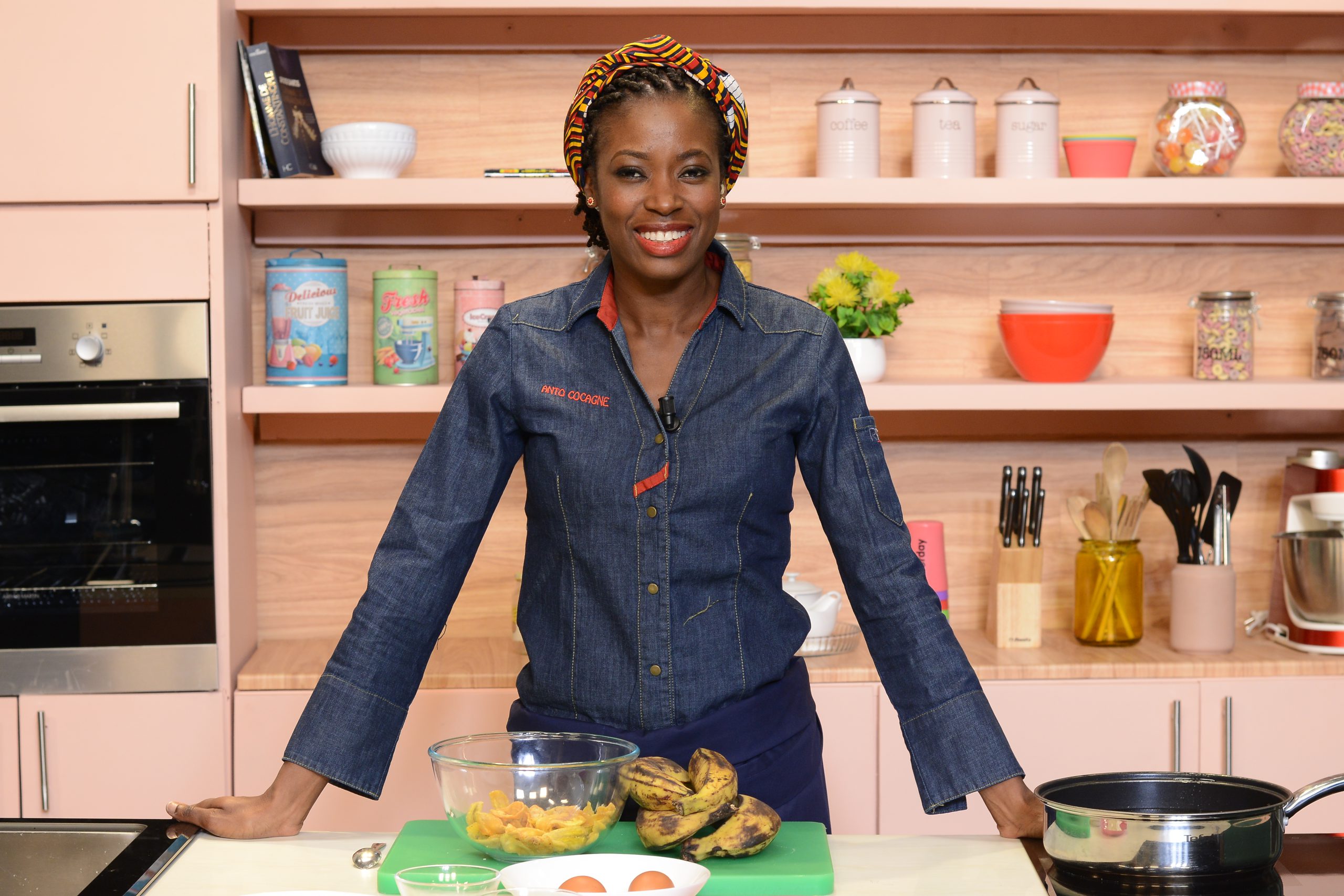
Based in Paris, Antompindi Cocagne, known as Chef Anto, is dedicated to bringing the flavors and culinary heritage of sub-Saharan Africa to life. A private chef, consultant, and TV host, she is also the author of Goût d’Afrique (2019) and Mon Afrique (2025). Curious, perseverant, and committed, she celebrates the continent daily. An encounter with this multi-talented French-Gabonese woman.
WHERE DID YOUR PASSION FOR COOKING COME FROM?
As the eldest daughter, cooking was initially a family duty. I learned by watching my mother and my aunts. It was also a friendly setting for recipes, transmission, and confidences among women. Unlike school, I could spend hours there without seeing time pass by.
WAS IT EASY TO MAKE IT IN YOUR PROFESSION?
My parents pushed me to be ambitious, telling me repeatedly that Gabon needed lawyers and doctors, not cooks. They didn’t understand why I wanted to go to France to learn what they believed I had already mastered. I told them that my ambition was to introduce our country through gastronomy, as Chef Paul Bocuse had done in France. I had discovered him on television, as well as Ma.t. and Robuchon, and by the age of 13, I was fascinated by their ability to promote their country
WHAT WORDS WOULD YOU CHOOSE TO DEFINE THE SPIRIT AND FLAVORS OF YOUR CUISINE?
I would describe my cuisine as Pan-African, because I want to showcase the products and expertise of our regions (peanut sauce, working with cassava, okra cuisine), while reminding people that these ingredients largely transcend the borders. Next, discovery, because my cuisine invites those who do not know it to explore it, and those who already know it to rediscover it differently. My goal is to preserve the original flavors while reinventing the visual presentation. Finally, absolutely delicious, because I place great importance on the subtle use of spices in our cuisines. I will always remember my surprise upon arriving at the hotel school in Grenoble when they taught us that it was enough to season with just salt and pepper.
WHAT, IN YOUR OPINION, DOES AFRICAN CUISINE EMBODY TODAY?
In my opinion, it is still too little known internationally, and even in France, despite social diversity. Unfortunately, this lack of knowledge also concerns professionals. Many chefs are completely unaware of the quality of our products and our expertise. My cooking, my shows, and my books aim to highlight our culinary wealth, our specific and preserved techniques, and especially the strong connection we maintain with nature. I am often astonished, during my shoots, to discover regional skills of incredible precision and quality, without the artisans truly measuring their value. As sub-Saharans, this awareness is crucial.
YOUR FILMING AND TRAVELS REGULARLY LEAD YOU TO EXPLORE THE AFRICAN CONTINENT. WHAT ARE YOUR FAVORITE CULINARY DESTINATIONS
Without hesitation, Morocco and Cameroon! Before coming for the Morocco Gourmand shoot, it was truly Cameroon that impressed me with the richness of its gastronomy and the mastery of spices. Each region offers genuinely different cuisine and products. I appreciated finding that same diversity in Morocco. What I also loved there was the expertise developed around bread, especially stone-baked, and sweet dishes. In sub-Saharan Africa, bread and desserts are not part of traditional dishes; in Morocco, I enjoyed discovering the confectionery work around almonds and dried fruits.
WHAT DO YOU SYSTEMATICALLY BRING BACK FROM YOUR TRAVELS?
Spices! When I return, I test and mix them to create new recipes. I also write a lot during my stays. My discoveries and my encounters nourish my cooking and my reflections, especially for my books. I greatly appreciate the exchanges with chefs abroad, which are extremely enriching. During a shoot in Greece, I remember a joint tasting with a local chef focusing on okra, that very popular vegetable in Africa. I rediscovered it once again from another angle during the Morocco Gourmand shoot.
WHAT ARE YOUR GREATEST CULINARY DISCOVERIES ON THE CONTINENT?
I discovered néré during a shoot in a village in Senegal: these are small black seeds dried in the sun. A real gem, 100% plant-based, with a cheesy taste, which has become a staple in my kitchen. I sometimes use it simply with pasta in tomato sauce. In Mon Afrique, I also show how African ingredients can be incorporated into Western classics, such as sweet potato shepherd’s pie, plantain lasagna, and yam scalloped potatoes.
HAS A MOROCCAN RECIPE PARTICULARLY APPEALED TO YOU TO THE POINT OF FINDING A PLACE IN YOUR KITCHEN?
I loved the sardine meatball tagine. Being from Libreville, I love fish. I even brought a tagine pot home so I could make it myself. I also have an intense memory of an incredibly tender vegetable and meat tagine in a small village in the High Atlas.
2 FAVORITE RECIPES
BEEF STEW WITH OKRA AND NÉRÉ– GHANA
Difficulty: Easy
Preparation Time: 20 min
Cook Time: 2h00
Cost: Medium
Ingredients for 6 servings:
- 1 kg of beef chuck (basse côte) (optionally other meat, tofu, or beans)
- 5 cloves of garlic
- 2 onions
- 2 sweet peppers
- 3 tbsp. of tomato paste (concentrate)
- 4 tbsp. of néré powder, also called nététou
- 1 tbsp. of cornstarch
- 1 bouquet garni (herb bundle)
- 5 large carrots
- 150 g of okra
- . bunch of flat-leaf parsley
- Vegetable oil
- Salt, pepper
Preparation:
Finely chop the garlic, onions, and peppers. Cut the meat into pieces. In a Dutch oven over high heat, pour enough oil to brown the beef pieces. When they are golden, add the tomato paste, néré powder, garlic, onions, and peppers. Sweat for 15 min, stirring occasionally. Add water up to the level of the ingredients, then add the bouquet garni. Simmer over low heat for 45 min. Cut the carrots in half lengthwise, then in half widthwise. Add them to the pot with the cornstarch diluted in a little cold water. Add water up to the level of the ingredients. Salt and pepper. Cook over low heat for another 45 min. Cut off the ends of the okra and add them 15 min before the end of cooking. Taste and adjust seasoning if necessary. Sprinkle with chopped parsley.
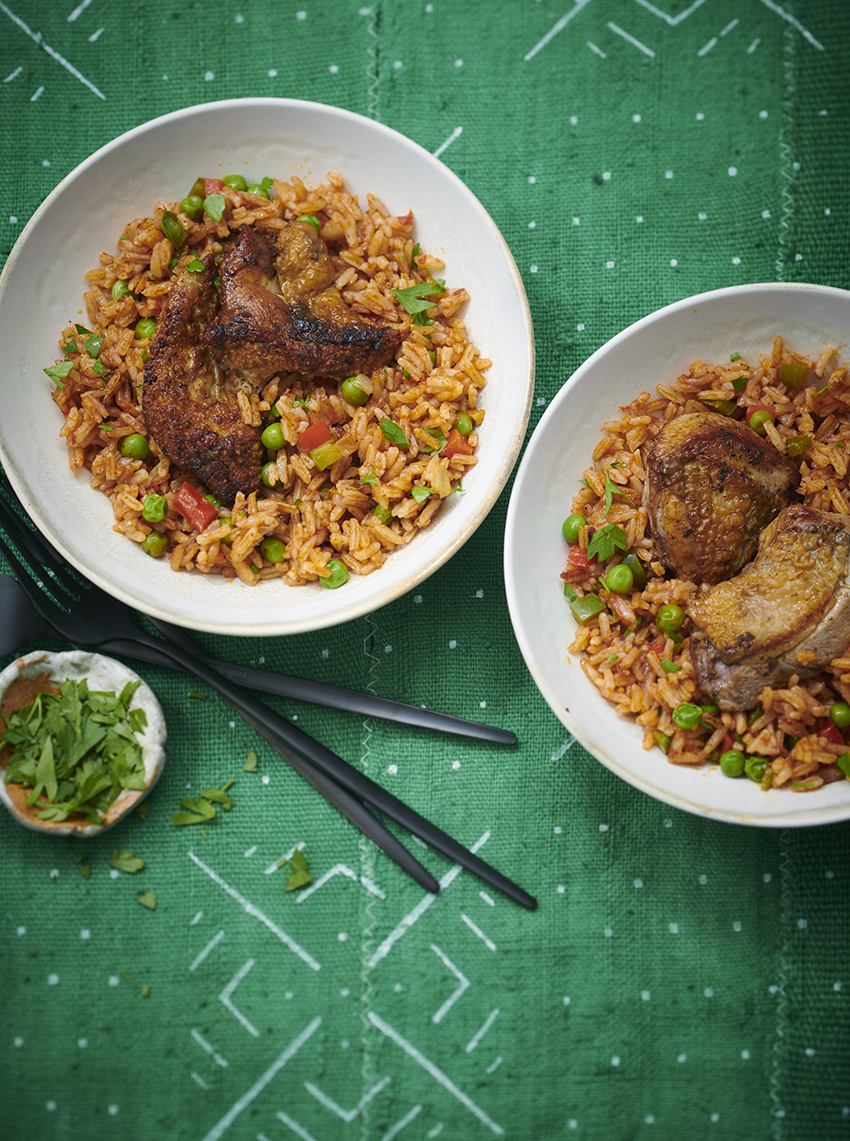
CHICKEN WITH PEANUT SAUCE – REPUBLIC OF THE CONGO
Difficulty: Easy
Preparation Time: 30 min
Cook Time: 1h00
Cost: Affordable
Ingredients for 6 servings:
- 1.2 kg of chicken
- 4 cloves of garlic
- 5 centimeters of fresh ginger
- 1 stalk of lemongrass
- 3 tbsp. of peanut paste
- 1 tbsp. of honey
- 3 tbsp. of soy sauce
- 2 tbsp. of hot water
- 1 tsp. of chili powder
For the Sauce:
- 60 cl of vegetable broth
- 40 g of fumbwa (optionaltraditional plant)
- 2 tbsp. of peanut paste
- 1 bunch of spring onions
- 2 cl of vegetable oil
- Salt, pepper
- 2 tbsp. of crushed roasted peanuts
- . bunch of cilantro (coriander)
Preparation:
Make the marinade: Peel and finely chop the garlic and ginger. Finely slice the lemongrass. In a bowl, mix half of the garlic and ginger with the lemongrass, chili, honey, peanut paste, and soy sauce. Mix well. Add hot water for a smooth consistency. Cut the chicken into pieces. Brush the pieces with the marinade, and set aside in the refrigerator for 30 min. In a sauté pan, pour the oil and sear the pieces of chicken on each side. Remove and set aside.
Make the sauce:
Wash and mince the spring onions. In the sauté pan, sweat the remaining chopped garlic and ginger, with the minced spring onions. Add the vegetable broth, any remaining marinade, fumbwa, and the grilled chicken pieces. Simmer over medium heat for 1 hour. Taste and adjust seasoning if necessary.
Serve with white rice, sprinkled with crushed peanuts and fresh chopped cilandro.
A leading figure in Moroccan fashion, Albert Oiknine embodies a generation of designers who have…
A leading figure of the caftan, Zineb Joundy embodies an open, outward-looking creative vision shaped…